How Often Should You Water a Bonsai Tree?
The fastest way to kill a bonsai is to water it on autopilot. The right moment depends on the species, the pot size, the soil mix, the season and the weather that day. A juniper on a hot balcony might drink twice in a single afternoon, while the same tree indoors in January could go four days. The skill is reading the soil, not following a rule.
How do you know when a bonsai needs water?
Push a finger half an inch into the soil near the trunk. If it feels dry there, water now. If it is still cool and damp, wait and check again later. A wooden chopstick left in the soil works too: pull it out, and dry pale wood means water while dark damp wood means hold off.
Weight is the other tell. Lift the pot right after a thorough watering and again a day later, and your hands learn the difference between full and thirsty. Bonsai soil is gritty and free draining by design, so it dries from the top down. Surface dryness alone is not the signal; the half-inch check catches the moment the root zone starts to run low.
How often should you water a bonsai in summer?
In peak summer most outdoor bonsai need water once or twice a day. Small pots and shallow trays dry fastest, sometimes within hours. Heat, wind and direct sun all speed evaporation. Check every morning, and again in the late afternoon during a heat wave, rather than trusting yesterday's timing.
Species matter here. Tropical trees like ficus tolerate steady moisture, while pines and junipers prefer to dry slightly between waterings. A larger volume of soil holds water longer, which is why beginners often do better starting with a mid-size pot. Mulching the surface with moss slows drying, but the finger check still rules.
Should you water bonsai on a schedule?
No fixed schedule survives a change in weather. A calendar reminder is useful as a prompt to go and check the soil, not as a command to pour water regardless. Overwatering a tree that is already moist suffocates the roots, and that damage is slower to spot than the wilt of a dry tree.
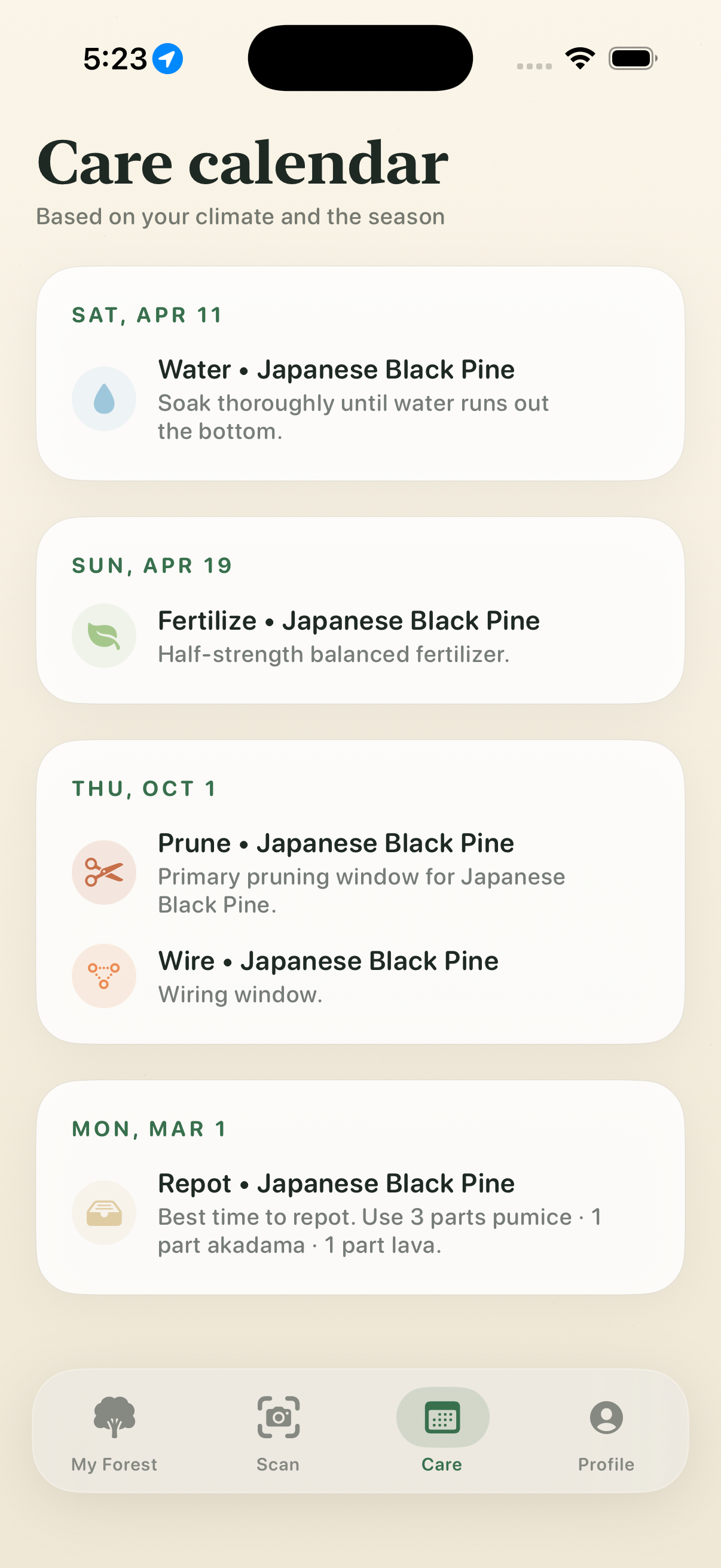
Reminders work best when they adapt. Kodama pulls your USDA zone from your location and nudges you based on species and season, so the prompt to check arrives more often in July than in December. You still make the call at the pot, but the app keeps the rhythm honest across a collection where every tree drinks at its own pace.
What is the right way to water a bonsai?
Water slowly from above with a fine rose or watering can until water flows freely from the drainage holes, then pause and water again to be sure the whole root mass is soaked. Avoid a hard jet that carves channels in the soil. Drench thoroughly, then let it drain; never leave the pot sitting in a saucer of water.
Lukewarm or room-temperature water is gentler on roots than icy water straight from the tap. If the soil has gone bone dry and water runs straight through without wetting, dunk the whole pot in a basin until the bubbles stop, then let it drain. Bottom-up rehydration rescues a mix that has become hydrophobic.
Key takeaways
- Water when the top half inch of soil is dry, not on a fixed calendar.
- Summer outdoor bonsai often need water once or twice daily; winter much less.
- Soak until water runs from the drainage holes, then let the pot drain fully.
- Overwatering suffocates roots and is harder to spot than underwatering.
- Use a finger check or chopstick to confirm moisture before every watering.
Frequently asked questions
- Can you water a bonsai every day?
- Sometimes, but not by default. In hot summer weather many outdoor bonsai genuinely need daily or twice-daily water. In cooler months daily watering will drown the roots. Check the soil each time and water only when the top half inch is dry, so the frequency follows the weather rather than a habit.
- How do I know if I am overwatering my bonsai?
- Constantly soggy soil, yellowing leaves that drop easily, a sour smell from the pot and soft blackened roots all point to overwatering. The fix is to let the soil dry to slightly damp before the next watering, confirm the drainage holes are clear, and repot into a grittier free-draining mix if the problem repeats.
- Should I mist my bonsai?
- Misting raises humidity around the foliage and is helpful for tropical species indoors in dry winter air, but it is not a substitute for watering the soil. The roots drink from the soil, not the leaves. Mist as a supplement when the air is dry, and keep checking the soil for the real watering decision.
- Does the type of soil change how often I water?
- Yes. Gritty inorganic mixes like akadama, pumice and lava drain fast and dry quicker, so they need more frequent watering but resist root rot. Heavier organic potting soil holds water longer and dries slowly, which raises the risk of overwatering. Match your watering rhythm to the mix in the pot.
Bonsai Horticulture & Care, BigBalli. We turn species-specific horticulture into daily guidance, cross-checked against sources including the RHS and experienced growers.
Kodama provides horticultural and educational guidance, not a guarantee of results. Watering needs vary by species, pot, soil and climate; always confirm moisture at the soil before watering a specific tree.