When Should You Repot a Bonsai Tree?
Repotting is the part of bonsai that scares beginners and saves trees. A pot-bound bonsai slowly chokes itself: roots circle, soil compacts, water runs off instead of soaking in, and growth stalls. Repotting opens that root mass back up, replaces tired soil with fresh draining mix, and resets the cycle. Done at the right moment, the tree barely notices; done at the wrong one, it can be a serious setback.
How do you know when a bonsai needs repotting?
Lift the tree gently from its pot in early spring and look at the roots. If they circle the pot wall in a dense mat or fill the soil so you can barely see it, the tree is pot bound and ready. Other signs are water sitting on the surface instead of draining, and growth that has slowed despite good care.
Do not repot just because a year has passed. A tree with room to grow gains nothing from the disturbance. Check the roots and let them decide. Younger trees in development fill a pot fast and may need attention every spring, while a refined old tree in a shallow pot can hold for several years between repottings without trouble.
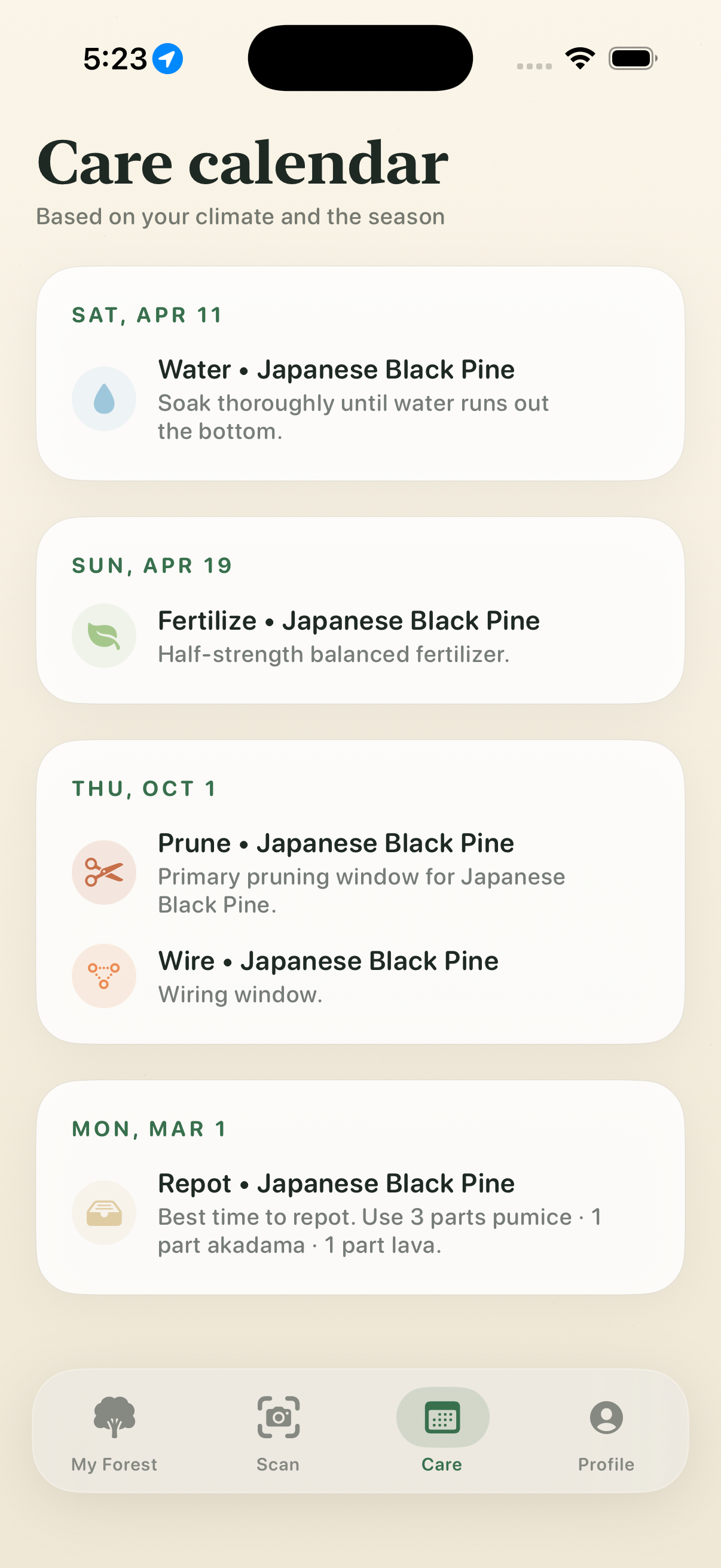
What is the best time of year to repot a bonsai?
Early spring is the prime window, just as the buds swell but before they open into leaves. The tree is leaving dormancy with a surge of energy and will push fresh roots quickly into the new soil. Repotting in summer heat or autumn forces recovery at the worst time and risks losing the tree.
Tropical species kept indoors are more flexible and can be repotted in late spring or summer when they are warm and growing. Temperate trees should wait for that pre-bud-burst moment outdoors. Watching your own tree is better than watching a calendar, since a warm or cold spring shifts the window by weeks. Knowing the species tells you which rule applies.
How much root should you cut when repotting?
Comb out the root ball, then trim back the outer and longest roots, generally removing up to about a third of the mass. Cut cleanly with sharp scissors, remove any thick circling or downward roots, and preserve the fine feeder roots that take up water. The goal is a flatter, radial root system that fits the pot with room for new growth.
Cutting too much at once leaves the tree unable to support its foliage and can kill it. Cutting too little defeats the purpose, since the pot quickly fills again. After trimming, work fresh free-draining soil into the gaps with a chopstick so no air pockets remain, secure the tree with wire, and water thoroughly to settle the mix.
How do you care for a bonsai after repotting?
After repotting, keep the tree in a sheltered, shaded spot out of strong wind and direct midday sun for two to four weeks while new roots establish. Water normally but do not fertilize until you see fresh growth, since fertilizer can burn freshly cut roots. Protect it from frost, and avoid any pruning or wiring during recovery.
A freshly repotted tree is fragile at the roots even though the top looks unchanged. Treat the recovery period as protected rest. Resume full sun gradually once new shoots appear, which signals the roots have taken hold. Hold off on feeding for three to four weeks, then start a light feeding routine as the tree returns to vigorous growth.
Key takeaways
- Repot when roots fill the pot, not on a fixed yearly schedule.
- Young trees often need it every one to two years; old trees every three to five.
- Early spring, as buds swell before they open, is the best window for temperate trees.
- Trim up to about a third of the roots and preserve the fine feeder roots.
- Shelter the tree and hold off fertilizer until fresh growth appears.
Frequently asked questions
- What happens if you never repot a bonsai?
- The roots keep circling until they fill the pot, soil compacts, and water runs off the surface instead of soaking in. Starved of oxygen and fresh nutrients, the tree slows, weakens and eventually declines. Repotting is not optional maintenance; without it a healthy bonsai gradually strangles itself in its own root mass over a few years.
- Can I repot a bonsai in summer?
- Temperate trees should not be repotted in summer heat, when cutting roots while the tree is in full leaf causes severe stress. Tropical species kept warm indoors are more forgiving and can be repotted in late spring or summer. For most outdoor bonsai, wait for the early spring window just before the buds open.
- Do I need a bigger pot when I repot?
- Not usually. The point of bonsai repotting is to refresh soil and trim roots so the tree thrives in the same size pot, keeping it small. You may move up a size for a young tree still in development, but a refined bonsai goes back into the same or a similar pot after its roots are trimmed.
- Should I water a bonsai right after repotting?
- Yes. Water thoroughly immediately after repotting to settle the fresh soil around the roots and remove air pockets, using a gentle flow so you do not wash the mix out. After that first soak, water as the soil dries during recovery, and keep the tree sheltered from harsh sun and wind while new roots establish.
Bonsai Horticulture & Care, BigBalli. We turn species-specific horticulture into daily guidance, cross-checked against sources including the RHS and experienced growers.
Kodama provides horticultural and educational guidance, not a guarantee of results. Repotting timing and root work vary by species and climate; for rare or valuable trees, consult an experienced bonsai grower before repotting.