How Do You Prune a Bonsai Tree?
Pruning is how a small tree becomes a bonsai instead of a shrub in a pot. Every cut directs where the tree spends its energy next. Pinch and trim through summer to refine the silhouette and force tighter growth, and make the heavier structural cuts when the tree can spare the energy. Get the timing and the tool right, and the tree heals fast and grows where you want it.
What is the difference between maintenance and structural pruning?
Maintenance pruning trims new shoots and leaves to keep an established shape and encourage dense, fine growth, and you do it through the growing season. Structural pruning removes whole branches to set the tree's basic form, and it is best done in late winter dormancy or early spring, when the tree is not actively pushing leaves and can recover.
Maintenance work is light and frequent: pinch back shoots once they extend past the silhouette, and remove leggy growth so light reaches the interior. Structural work is occasional and decisive, taking out a thick competing branch or shortening the trunk line. Doing heavy cuts in the wrong season bleeds sap and weakens the tree, so the calendar matters as much as the cut.
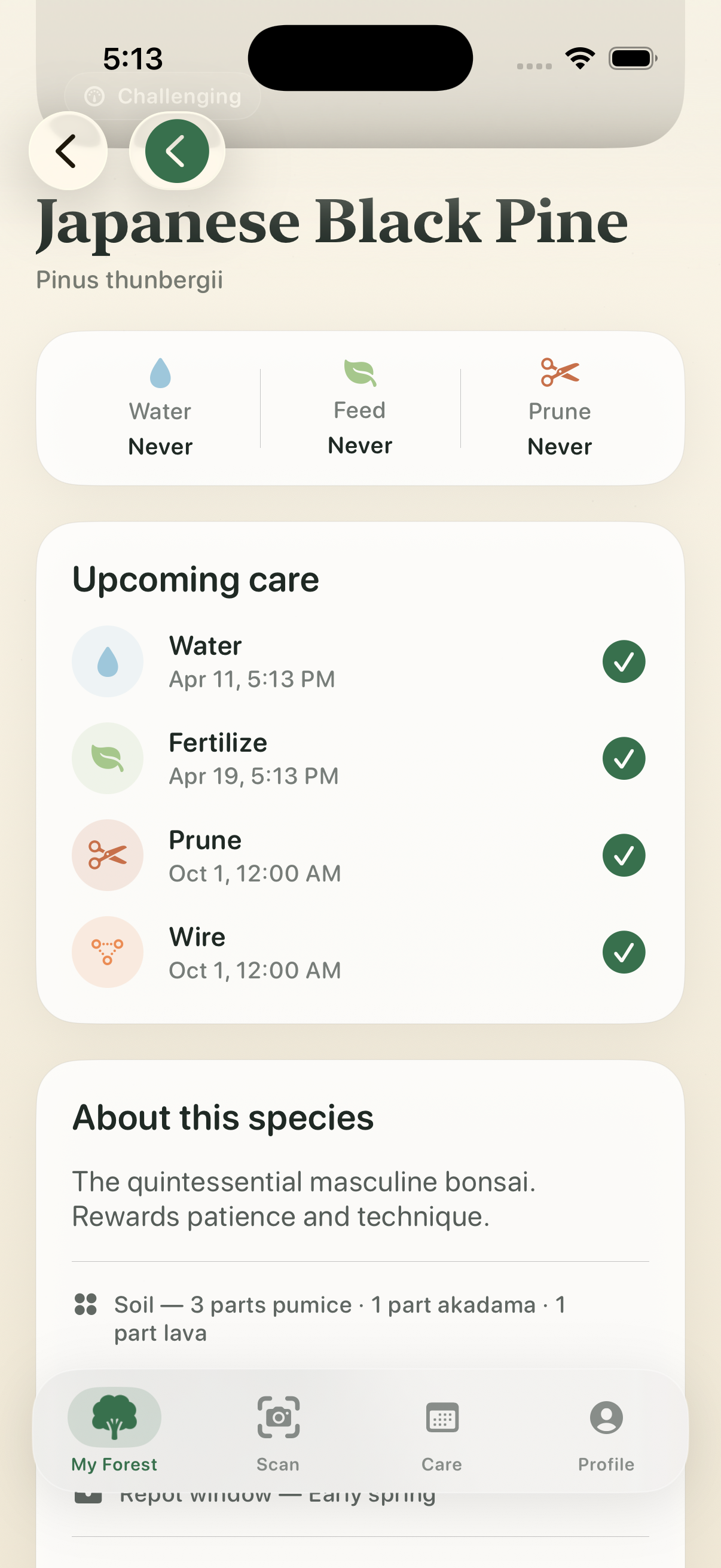
When is the best time to prune a bonsai?
Structural pruning is best in late winter to early spring before the buds swell, so wounds heal as growth resumes. Maintenance pruning happens through spring and summer while the tree grows. Avoid heavy pruning in autumn, when the tree is winding down and cannot seal large wounds before cold sets in.
Deciduous trees like maples and elms respond well to a hard prune at the end of dormancy. Pines have their own rhythm, with candle pinching in spring and needle work in autumn. Flowering species are pruned after they bloom so you do not cut off next year's buds. Matching the cut to both the season and the species protects the tree's vigor.
How much can you prune off a bonsai at once?
As a rule, never remove more than about a third of the foliage in a single session. Leaves feed the tree, and stripping too many at once starves the roots and can kill a weak tree. If a tree needs a major reduction, spread the work across two or three seasons and let it recover between each stage.
Vigor decides how aggressive you can be. A strong, healthy tree pushing lots of growth tolerates a harder prune than one recovering from repotting or pest damage. Never prune and repot in the same session, since each is a major stress. When in doubt, take less, watch the response, and come back; you can always cut more, but you cannot reattach a branch.
What tools do you need to prune a bonsai?
A pair of sharp bonsai shears for shoots and leaves, and a concave branch cutter for removing branches flush so the wound heals into the trunk. Keep blades clean and disinfected between trees to avoid spreading disease. Sharp tools make clean cuts that seal quickly, while dull tools crush tissue and invite rot.
The concave cutter is the tool that distinguishes bonsai work, because it leaves a slight hollow that the bark grows over without an ugly stub. For larger wounds, a dab of cut paste keeps moisture in and pathogens out while the tree seals over. Wipe tools with alcohol between trees, especially if any tree shows signs of disease, so a single cut does not infect the bench.
Key takeaways
- Maintenance pruning keeps shape in the growing season; structural pruning builds shape in dormancy.
- Make heavy structural cuts in late winter or early spring, not autumn.
- Never remove more than about a third of the foliage in one session.
- Use sharp shears for shoots and a concave cutter for branches.
- Do not prune and repot in the same session; each is a major stress.
Frequently asked questions
- Will pruning hurt my bonsai?
- Done correctly, pruning strengthens a bonsai by directing growth and improving light and airflow. Done at the wrong time or too aggressively, it can weaken or kill a tree. Stay within a third of the foliage, use clean sharp tools, match the timing to the species, and the tree will heal and respond with tighter, healthier growth.
- How do I prune for a denser canopy?
- Cut back to a pair of leaves or a side bud facing the direction you want growth. Each cut prompts the tree to branch from buds below it, multiplying the number of shoots. Repeated through the growing season, this ramification builds the fine, twiggy structure that makes a bonsai canopy look like a full-size tree in miniature.
- Should I seal pruning wounds?
- Seal large cuts with bonsai cut paste to retain moisture and block pathogens while the wound calluses over. Small cuts from shears generally heal on their own and do not need paste. Sealing matters most on thick branch removals and on species that are slow to seal, where an open wound risks dieback or rot.
- Can I prune a bonsai in summer?
- Yes for maintenance pruning. Summer is when you pinch and trim new growth to hold the shape and encourage ramification. Save heavy structural cuts for dormancy, because removing large branches in the heat of active growth stresses the tree and bleeds more sap. Light, frequent summer trimming is exactly what an established bonsai wants.
Bonsai Horticulture & Care, BigBalli. We turn species-specific horticulture into daily guidance, cross-checked against sources including the RHS and experienced growers.
Kodama provides horticultural and educational guidance, not a guarantee of results. Pruning timing and intensity vary by species and tree vigor; for valuable or unfamiliar trees, consult an experienced bonsai grower before making major cuts.