How Much Should You Practice an Instrument Each Day?
How much to practice depends on your level and goals, but the pattern that works is short, focused, and daily. For most school and lesson students, 20 to 45 minutes a day is the sweet spot. Frequency matters more than any single session length, because the brain locks in motor skills during the rest between practices. A little every day beats a lot once a week.
How long should a beginner practice each day?
Beginners do well with 15 to 25 minutes a day, five or six days a week. Early on, lips, hands, and focus tire quickly, so short sessions protect technique and keep motivation high. Two 12 minute sessions can beat one 25 minute block. The aim at this stage is a daily habit, not a heroic amount of time on the instrument.
Pushing a young beginner to an hour usually backfires into tension, sloppy reps, and dread. Better to end while it still feels good, so they come back tomorrow. As stamina and attention grow over months, the sessions stretch naturally. The first goal is showing up every day, because the habit is the engine that makes everything else possible.
Is it better to practice every day or longer sessions?
Daily is better. Spaced practice, where the same total time is spread across more days, produces stronger and longer lasting skills than massed practice crammed into one sitting. Sleep between sessions consolidates motor memory. Thirty minutes a day for six days will beat three hours on Saturday for almost every student, even though the totals look similar.
This is the same spacing effect studied across learning research. Each night of sleep after practice strengthens what you worked on, so more nights means more consolidation. A single long session also brings fatigue, and tired reps build sloppy habits. Spreading the work keeps every rep fresh and gives your brain repeated chances to file the skill away.
How should you structure a practice session?
A simple structure is warm up, technique, repertoire, and a quick review. Spend a few minutes on long tones or easy scales, then drill the hard spots of your pieces slowly with a metronome, then play through for musicality, then note what to tackle tomorrow. Focused blocks beat aimless playing through from the top each time.
The mistake most students make is playing a piece start to finish on repeat, which rehearses the easy parts and barely touches the hard ones. Instead, isolate the two or three measures that break down and give them most of your time. Five focused minutes on a problem bar moves you further than twenty minutes of running the whole piece.
How much do advanced and professional players practice?
Serious pre college and conservatory students often practice two to four hours a day, and professionals maintain one to three hours, always broken into focused blocks with breaks. The total is high, but it is never one unbroken stretch. They protect quality by resting between sessions, since attention and physical control fade after about 45 to 60 minutes.
The famous research on elite musicians by Anders Ericsson found that top violinists accumulated more deliberate practice than their peers, but that practice was effortful and focused, not idle repetition. Quantity follows quality, not the other way around. A beginner copying a professional's hours without the focus would build fatigue and bad habits, not skill. Match the time to your level.
Key takeaways
- Daily focused practice of 20 to 45 minutes suits most students better than long weekend sessions.
- Beginners should start at 15 to 25 minutes and build stamina over months.
- Spaced practice with sleep between sessions consolidates skills better than cramming.
- Structure each session: warm up, technique, repertoire, review the hard spots slowly.
- Advanced players log more hours, but always in focused blocks with rest, not one stretch.
Frequently asked questions
- Is 30 minutes a day enough?
- For most lesson and band students, yes. Thirty focused minutes a day, where you target the hard spots with a metronome rather than playing through pieces, produces steady progress. The key word is focused. Thirty minutes of deliberate, slow, accurate practice beats an hour of mindless repetition, and it is far more sustainable as a daily habit.
- Does practicing longer make you better faster?
- Only up to a point, and only if the practice stays focused. Beyond roughly 45 to 60 minutes without a break, attention and physical control drop, and tired reps build sloppy habits. More total time helps when it is split into quality blocks with rest. Doubling a distracted hour does not double your progress.
- What if I miss a day?
- One missed day will not undo your progress, so do not treat it as failure. Just return the next day rather than trying to make up the time with a punishing double session, which tends to be fatigued and low quality. Consistency over weeks matters far more than any single perfect or missed day.
- Should I track my practice time?
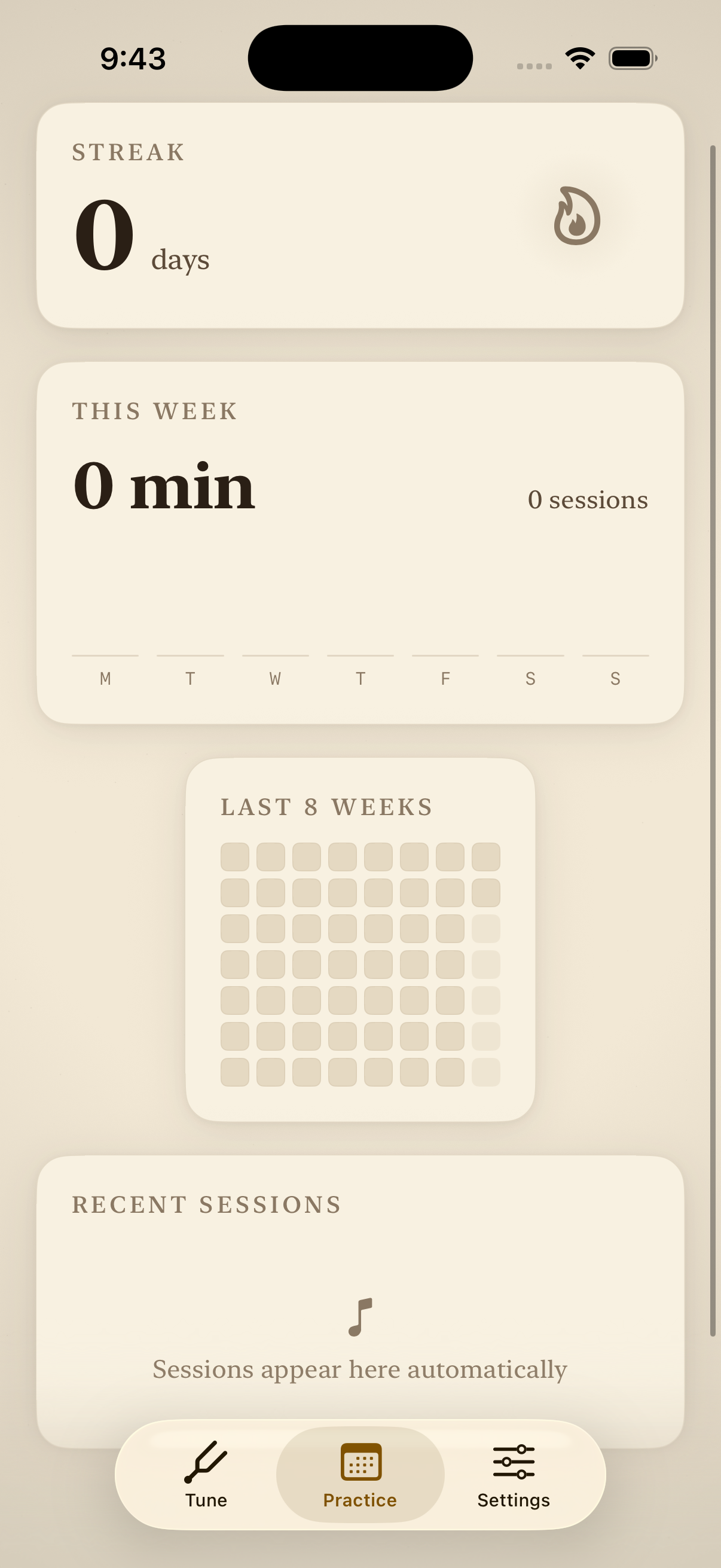
- Tracking helps because it turns a vague intention into visible evidence, which keeps the habit honest and motivates you on low days. Seeing a streak or a weekly total makes the daily choice easier and gives your teacher real data about your week. Automatic logging removes the friction of remembering to write it down.
Music Education & Practice Research, BigBalli. We turn everyday tuning, tempo, and practice questions into clear guidance for students, parents, and private teachers.
PitchLab is a practice and tuning tool for musicians. Practice amounts are general guidance; follow the plan set by your own teacher for your level and goals.