How Do You Show Your Music Teacher You Practiced?
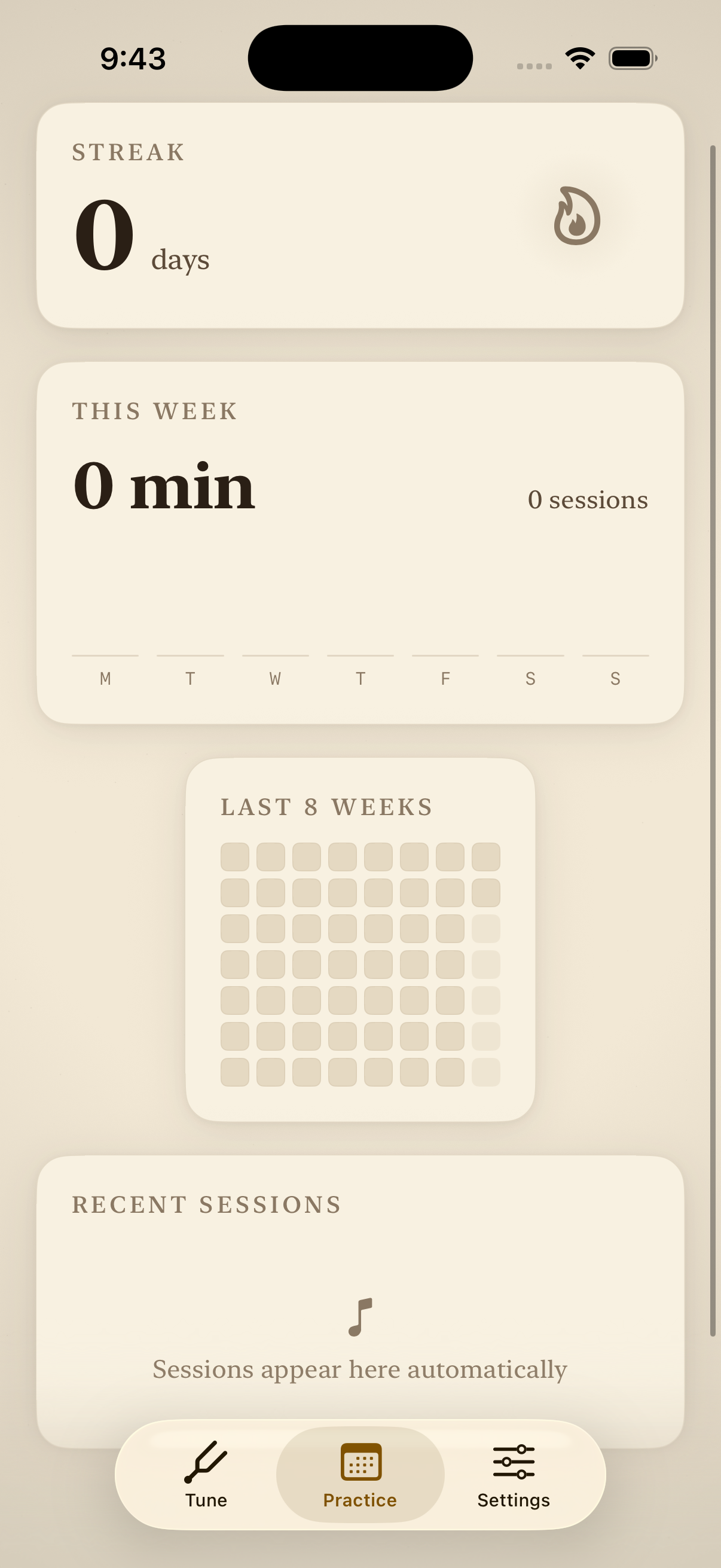
Teachers can hear whether you practiced, but the conversation goes better when you can show the work. A simple record of your minutes, your daily streak, and which days you played turns "I think I practiced enough" into proof. The most reliable record is one that fills itself in while you play, so nothing depends on remembering to write it down.
What counts as proof of practice?
Proof is concrete data: total minutes, number of days, and a visible trend. A weekly bar chart showing thirty minutes on five days is far stronger than saying "a lot." Teachers want to see consistency and effort, not a single big session. The best proof shows the pattern across the week, including the days you nearly skipped but did not.
A logbook of dates and durations answers the real question behind "did you practice," which is "did you build the habit." Five days of focused work tells a teacher your technique had time to consolidate. One long cram the night before does not, and they can usually tell. Data that matches what they hear builds trust quickly.
Why do students forget to log practice?
Manual logs fail because they rely on memory at the worst moment, after a session when you are tired and ready to move on. By the lesson, the details blur: was that thirty minutes on Tuesday or twenty on Wednesday? Paper charts get lost, and self reported times drift optimistic. The friction of remembering is why most practice journals end up half empty.
Automatic logging solves this by recording the session as it happens. If the tuner or metronome you already use notes when you start and stop, the log builds itself. There is nothing to remember, nothing to fudge, and nothing to lose. The record reflects what you actually did, which is exactly the honesty a teacher is looking for.
How do you show your data in a lesson?
Open your practice history at the start of the lesson and let the teacher see the week at a glance: minutes per day, the streak, and any session details. Point to the days you struggled and the days you broke through. This turns the first two minutes of the lesson into a focused review instead of an awkward question and answer.
The conversation shifts from whether you practiced to what you practiced and how it went. If Thursday shows only ten minutes, you can explain it. If the chart climbs all week, the teacher can plan the next challenge with confidence. Real numbers let both of you spend the lesson on music rather than on accountability.
What should you track besides minutes?
Beyond raw minutes, track which days you practiced, the length of each session, and your current streak. Session detail and a daily heat map reveal patterns, like always skipping weekends or cramming before lessons. Those patterns are what a teacher can help you fix. The point is not vanity numbers but information you can both act on.
A heat map that shades busy days darker makes gaps obvious at a glance. If three light days cluster before each lesson, you and your teacher can plan around your real schedule. Tracking the shape of your week, not just the total, turns the log from a report card into a planning tool that actually improves how you practice.
Key takeaways
- Proof of practice is concrete data: minutes, days, and the trend across the week.
- Consistency across five days beats one long cram, and teachers can tell the difference.
- Manual logs fail because they rely on memory; automatic logging records the truth.
- Open your practice history at the start of the lesson to focus the conversation.
- Track session length, streak, and a daily heat map to reveal patterns worth fixing.
Frequently asked questions
- Can my teacher tell if I lie about practicing?
- Usually, yes. Teachers hear unsteady passages, missed technical work, and pieces that have not progressed since last week. Claiming hours you did not put in rarely holds up against what your playing reveals. Honest data that matches your sound builds trust, while inflated claims that contradict your playing quietly erode it over time.
- Does practice quality or quantity matter more?
- Quality matters more, but quantity is easier to show. Focused, slow, accurate practice produces results that careless repetition never will. A log gives you the quantity and consistency, while your playing demonstrates the quality. The two together tell the full story, which is why teachers appreciate students who track time and also practice with intent.
- How do I track practice automatically?
- Use a tool that records sessions as you play rather than asking you to log them later. If your tuner or metronome notes when you start and stop, your practice history builds itself with no extra step. This removes the friction that kills most manual logs and produces an accurate record you can show without effort.
- Will a streak actually keep me motivated?
- For many students, yes. A visible streak makes the daily decision easier, because you do not want to break the chain you have built. It rewards consistency, which is exactly the habit that drives progress. The streak is most useful when it tracks real sessions automatically, so it reflects genuine effort rather than wishful logging.
Music Education & Practice Research, BigBalli. We turn everyday tuning, tempo, and practice questions into clear guidance for students, parents, and private teachers.
PitchLab is a practice and tuning tool for musicians. It records time spent with the app and is meant to support, not replace, your teacher's own assessment of your progress.