Why Do Symptoms Come Back During FODMAP Reintroduction?
Symptoms come back during reintroduction because each challenge intentionally reintroduces a FODMAP your gut may not tolerate. That is the signal you are looking for. A reaction during a challenge identifies a trigger. A reaction between challenges, when you are eating low-FODMAP, usually means something else is at play, such as stress, illness, sleep loss or an accidental high-FODMAP ingredient.
Why do symptoms flare during a challenge?
FODMAPs are poorly absorbed carbohydrates that draw water into the bowel and ferment, producing gas. In a sensitive gut that means bloating, cramping, wind and altered bowel habits. During a challenge you eat a concentrated dose on purpose, so a flare is the expected result when you have hit a group you do not tolerate well at that amount.
This is the test doing its job. The whole point of reintroduction is to provoke a controlled reaction so you can identify a trigger. A flare during the mango challenge tells you fructose is a problem at that dose. The discomfort is temporary and informative, and it should settle once you stop the food and return to baseline.
Why do symptoms appear between challenges?
When you are eating low-FODMAP between challenges and symptoms still appear, the food is usually not the cause. Stress, anxiety, poor sleep, menstrual cycles, illness, medications and hidden high-FODMAP ingredients all trigger IBS independently. These confounders are the main reason a calm week and a rough week can look so different on the same baseline diet.
IBS responds to far more than food. A stressful deadline or a short night can churn your gut without a single FODMAP involved. That is why symptoms between challenges deserve scrutiny before you blame the diet. Checking what else changed, sleep, stress, an unfamiliar meal, usually explains a flare that has nothing to do with the group you tested last.
How do you tell a trigger from a confounder?
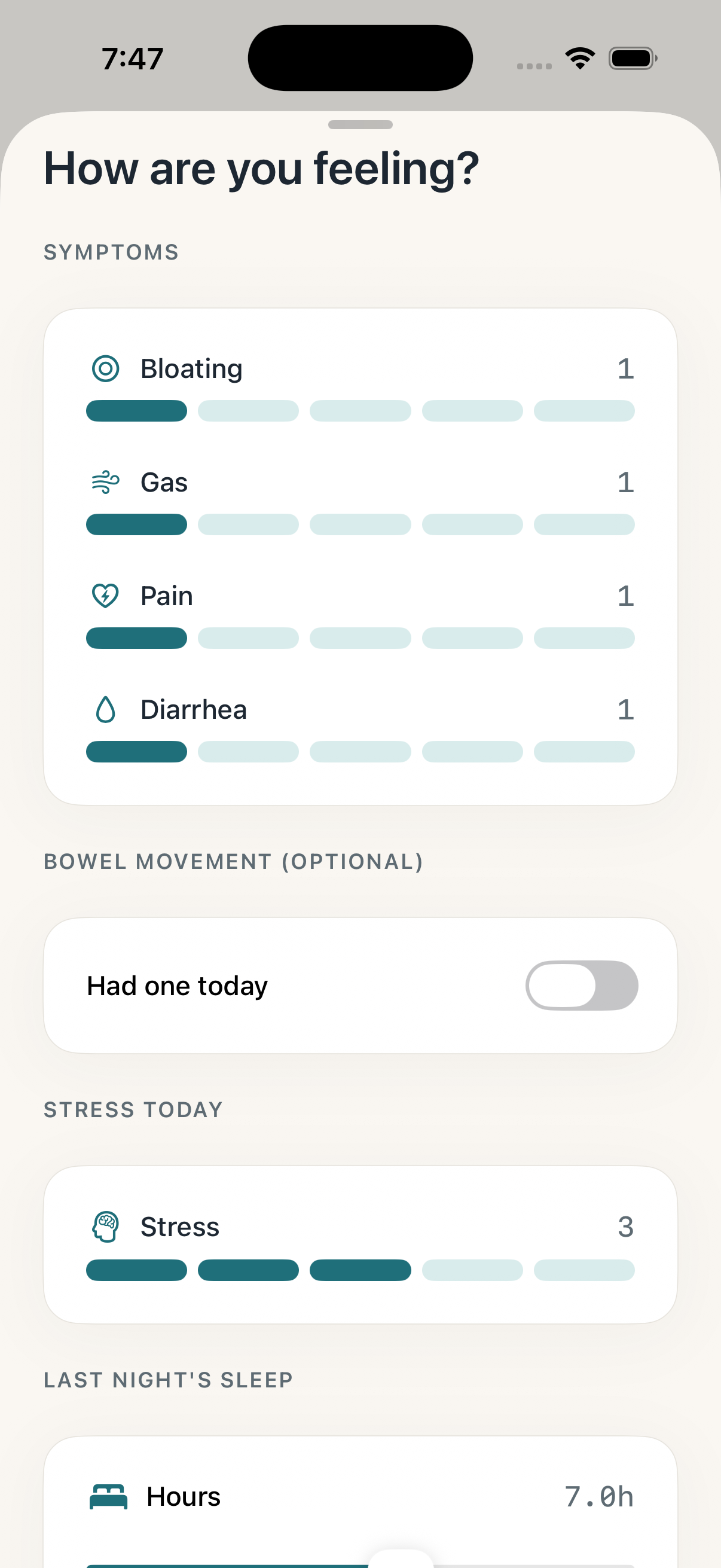
A FODMAP trigger tracks the test food: symptoms rise with the dose and appear within hours of eating it. A confounder shows up out of sync with the challenge, on a rest day, after a bad night, or during a stressful stretch. Logging sleep, stress and bowel habits alongside symptoms is the fastest way to tell the two apart.
Pattern is everything. If bloating climbs as the dose climbs, the food is likely the cause. If it appears on a washout day when you ate nothing new, look at your week instead. Reading symptoms in context, not in isolation, keeps you from blaming a food group for what was really a stressful Monday or a missed night of sleep.
How long should challenge symptoms last?
Most challenge reactions ease within a day or two once you stop the test food and return to baseline. Symptoms that drag on longer, or that are severe, bloody or accompanied by fever or weight loss, are not typical FODMAP reactions and need a doctor. The washout exists to give these reactions time to fully clear before the next test.
A normal reaction builds, peaks and fades as the FODMAP clears your system. If a flare lingers well beyond the washout, something other than the test food may be going on. Reintroduction is for known IBS, so any alarming or persistent symptom is a reason to step back from the protocol and get checked rather than keep testing.
Key takeaways
- Symptoms during a challenge are the test working; you fed your gut a FODMAP on purpose.
- FODMAPs draw water into the bowel and ferment, causing gas, bloating and pain.
- Symptoms between challenges usually point to stress, sleep, illness or hidden ingredients.
- A real trigger tracks the dose and appears within hours of the test food.
- Severe, bloody or persistent symptoms are not typical FODMAP reactions; see a doctor.
Frequently asked questions
- Is it normal to feel worse during reintroduction than elimination?
- Yes, on challenge days. Elimination removes triggers, so symptoms quiet down. Reintroduction adds a concentrated FODMAP back on purpose, so flares are expected when you hit a group you do not tolerate. Those days should be the exception, not the rule. Between challenges, on your low-FODMAP baseline, you should feel close to how you did during elimination.
- Why do I react on a washout day when I ate low-FODMAP?
- Because food is only one IBS trigger. Stress, poor sleep, hormones, illness and an accidental high-FODMAP ingredient can all flare your gut on a day you tested nothing. Check what else changed before blaming the diet. Logging sleep and stress alongside symptoms usually reveals the real cause of an out-of-sync washout-day flare.
- Should I take a break if reintroduction symptoms get overwhelming?
- Yes. Reintroduction has no deadline, so pausing to recover is sensible if a stretch of challenges leaves you worn down. Return to your calm low-FODMAP baseline until you feel steady, then resume. If symptoms are severe or unusual rather than just tiring, stop and speak with your doctor or dietitian before continuing the protocol.
Low-FODMAP Diet Research, BigBalli. We turn the Monash reintroduction protocol into a day-by-day plan, cross-checked against sources including Monash University and the NIDDK.
Reintro provides educational information about the low-FODMAP diet, not medical advice. Talk to your doctor or a FODMAP-trained dietitian before starting, especially if you have a diagnosed condition or take medication.