How Do You Know If You Passed or Failed a FODMAP Challenge?
Read a challenge by its symptoms against the rising dose. No meaningful bloating, pain, gas or bowel change through the large dose means a pass, and you tolerate that group. Symptoms that clearly track the test food mean a fail at that dose. The serving where symptoms began is your tolerance threshold, which is often more useful than a plain pass or fail.
What counts as passing a challenge?
A pass means you completed all three days, including the large dose, without a clear gut reaction. Mild, brief sensations that settle quickly usually still count as a pass. The bar is whether symptoms were strong enough to bother you and clearly tied to the test food, not whether your gut was perfectly silent for seventy-two hours straight.
Perfection is the wrong standard. Everyone has the occasional twinge that has nothing to do with FODMAPs. A pass is about the absence of a clear, food-linked reaction across the doses you tested. If you finished the large serving feeling normal, that group goes on your tolerated list and you can eat it at typical portions.
How do you know a reaction is real?
A real reaction tracks the test food and the dose. Symptoms that grow as the dose rises, appear within hours of eating, and match your usual IBS pattern point to the FODMAP. A reaction that comes out of nowhere on a low dose, or after a bad night or a stressful day, is more likely a confounder than a true food trigger.
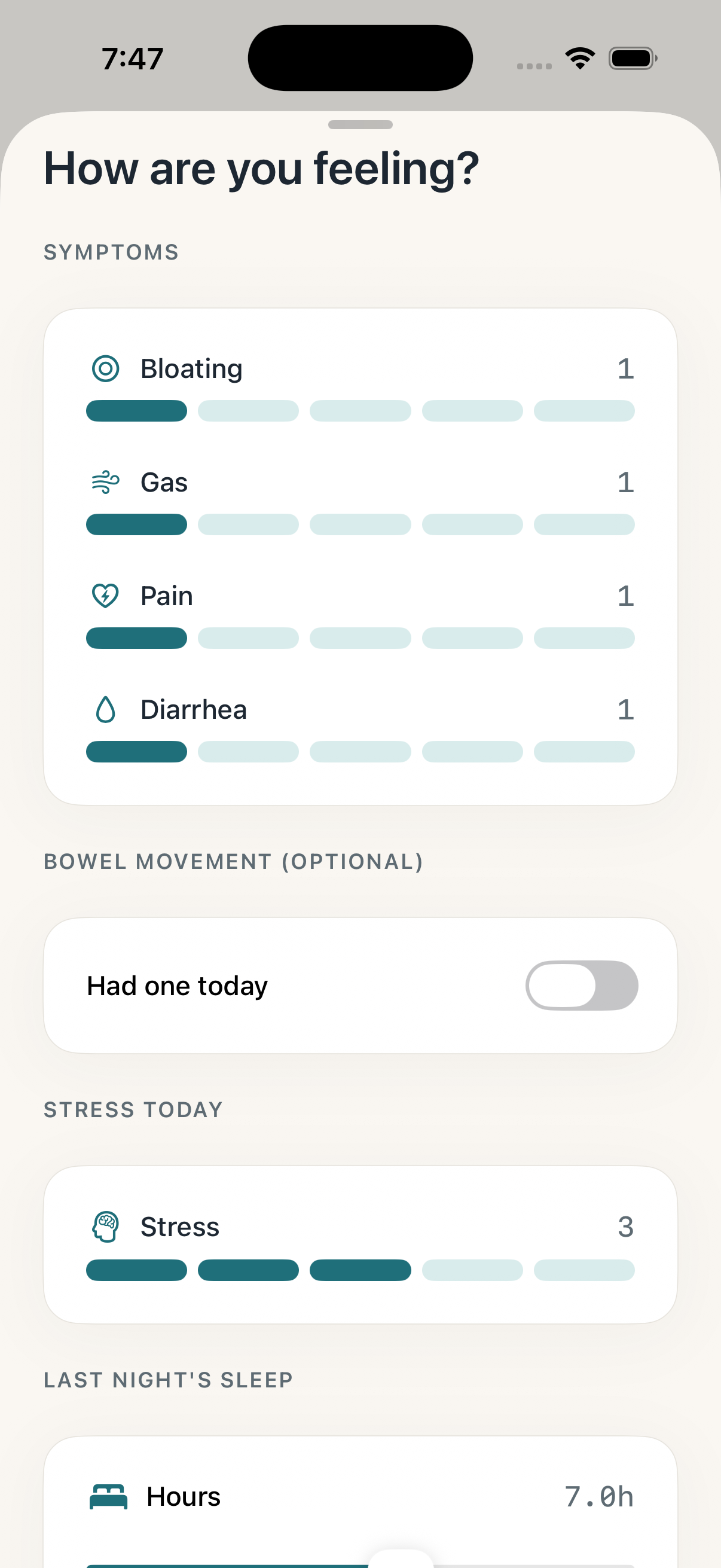
Timing and dose response are your best evidence. FODMAP symptoms usually appear within a few hours and ease over a day or so. If bloating arrives on the small dose but vanishes on the large dose, the food is probably not the cause. Logging sleep, stress and bowel habits alongside symptoms helps you separate a real trigger from noise.
What if the result is unclear?
Mark it inconclusive and retest later. An unclear result often comes from a confounder: a stressful week, a stomach bug, poor sleep or an accidental high-FODMAP meal. Wait for a calm baseline, then run the challenge again with the same food and doses. A clean second run usually settles it, and inconclusive is a valid, honest verdict.
Do not force a borderline challenge into a pass or fail. Guessing pollutes your tolerance map and can cost you a food group you actually tolerate. Inconclusive is a useful third option. It flags the group for a retest once life calms down, which is far better than a confident wrong answer you build the rest of your diet on.
Why does the threshold dose matter?
Tolerance is rarely all or nothing. You might handle a small serving of a FODMAP comfortably but react to a large one. The threshold dose tells you how much you can eat, not just whether you can. That turns a blunt fail into a practical limit, so you can enjoy a modest portion of a food instead of cutting it out entirely.
Knowing your threshold widens your diet. A person who fails lactose at a large dose may still drink a splash of milk in coffee with no trouble. Recording the dose where symptoms started lets you set realistic portion limits for each group, which is the difference between a usable long-term diet and an unnecessarily strict one.
Key takeaways
- A pass means reaching the large dose with no clear, food-linked gut reaction.
- A real reaction tracks the dose and appears within hours of the test food.
- Confounders like stress, poor sleep and stray high-FODMAP foods can fake a reaction.
- Inconclusive is a valid verdict; flag the group and retest from a calm baseline.
- The threshold dose tells you how much you can eat, not just yes or no.
Frequently asked questions
- How long after eating do FODMAP symptoms appear?
- Usually within a few hours, though some reactions take up to a day depending on the group and your transit time. Symptoms that start immediately or many days later are less likely to be the FODMAP. Logging the time you ate and the time symptoms began helps you match the reaction to the dose and judge whether it is real.
- Should I retest a group I failed?
- You can, especially if confounders may have skewed the first result. Wait for a calm baseline and run the same food and doses again. If the failure repeats cleanly, trust it. Tolerance can also improve months later as the gut settles, so many people retest failed groups about three months after finishing reintroduction.
- Can stress cause a false reaction during a challenge?
- Yes. Stress, anxiety, poor sleep and illness all drive IBS symptoms on their own, independent of food. That is why a challenge run during a hard week can produce a misleading fail. Tracking stress and sleep next to your symptoms lets you spot when a reaction was probably life, not the FODMAP you were testing.
Low-FODMAP Diet Research, BigBalli. We turn the Monash reintroduction protocol into a day-by-day plan, cross-checked against sources including Monash University and the American Gastroenterological Association.
Reintro provides educational information about the low-FODMAP diet, not medical advice. Talk to your doctor or a FODMAP-trained dietitian before starting, especially if you have a diagnosed condition or take medication.