What Does Your Tongue Say About Your Health?
The tongue is the one internal organ you can see without a scope. Doctors in China have read it for roughly 2,000 years, and modern dentists still check it first at every exam. A healthy tongue is pink, lightly moist, and dressed in a thin white film. When that picture changes, the change usually arrives before you feel sick, which is exactly why a daily look is worth the ten seconds it takes.
What can your tongue reveal about your health?
Your tongue reveals hydration, digestion, circulation and nutrient gaps. Color tracks blood and oxygen, coating tracks the gut, shape tracks fluid balance, and surface texture tracks vitamin levels. None of it diagnoses disease on its own, but a sudden shift is a reliable prompt to look closer or see a clinician.
Read four things in order: color, coating, shape, and moisture. A bright-red tip can follow a week of poor sleep and stress. Teeth marks along the edges show up when fluid pools in tissue. A glossy, coatless surface can signal low vitamin B12 or iron. Each sign is a data point, not a verdict, and the pattern matters more than any single mark.
What does tongue color mean for your body?
Tongue color tracks blood supply and oxygen. Pale pink within a thin coat is healthy. Very pale suggests low iron or fatigue. Deep red suggests heat, dehydration or infection. Purple or bluish suggests poor circulation. Color shifts gradually, so compare today against your own normal rather than a stranger's photo.
The Cleveland Clinic notes that a strawberry-red tongue can accompany fever, vitamin deficiency, or scarlet fever. A lasting purple cast deserves attention because it can follow chronic cold hands, sluggish blood flow, or heavy menstrual pain in TCM terms. One off day means little. A week of the same color is the signal.
What does the coating on your tongue tell you?
The coating is a thin film of cells, food debris and bacteria that mirrors your gut. A thin, even white layer is normal. A thick white coat suggests sluggish digestion or a cold pattern. A yellow or greasy coat suggests heat or damp in TCM, often after rich food, alcohol, or a cold coming on.
Brush the tongue, wait an hour, and look again. A coat that scrapes off and stays gone was just debris. A coat that returns thick by midday is telling you something about how your gut handled breakfast. Ayurveda calls this film ama, the residue of incomplete digestion, and treats a heavy morning coat as the first thing to clear.
Can your tongue show vitamin deficiency?
Yes. A smooth, glossy tongue that has lost its tiny surface bumps often signals low vitamin B12, folate or iron. This is called atrophic glossitis. Soreness, burning, and a beefy-red look can accompany it. A blood test confirms the cause, but the tongue frequently shows the change weeks before other symptoms appear.
The papillae, those rough points that grip food, shrink when the body runs short on B vitamins or iron. Vegans, older adults, and people on long-term acid reducers carry the highest risk. If your tongue has turned slick and tender, that is a concrete reason to ask your doctor for a B12 and ferritin panel.
How often should you check your tongue?
Check once a day, in the morning, before coffee or brushing. Use natural light and a clean mirror. Morning readings are the most consistent because food, drink and toothpaste all stain the surface. A daily baseline lets you spot a real change fast, instead of guessing whether today looks different from last week.
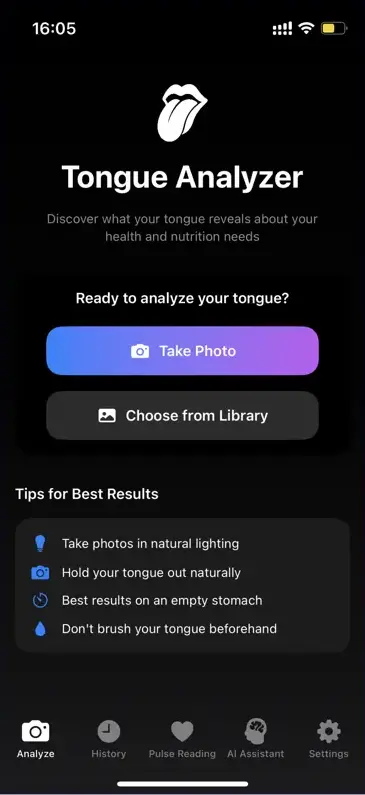
Consistency beats intensity. The same window, the same light, the same angle. That is the whole method. A photo log makes it easier, since memory is a poor judge of a slow color drift. Apps that store the images and compare them automatically remove the guesswork and flag the day your pattern actually moved.
Key takeaways
- Read color, coating, shape and moisture in that order, every morning, in natural light.
- Pale points to low iron or fatigue; deep red points to heat or dehydration; purple points to poor circulation.
- A thick or yellow coating reflects how your gut handled recent meals.
- A smooth, glossy tongue can flag low B12, folate or iron weeks before other symptoms.
- Compare against your own baseline, not a stranger's photo, and act on a sustained change.
Frequently asked questions
- Can the tongue diagnose a disease?
- No. The tongue shows patterns, not diagnoses. A sudden or lasting change is a prompt to hydrate, adjust diet, or see a clinician for blood work. Use it as an early warning system that points you toward the right question, never as a substitute for a medical exam or laboratory test.
- Why is my tongue white in the morning?
- A light white film overnight is normal, since saliva slows during sleep and bacteria build up. Brush or scrape it and it should thin out. A thick white coat that stays through the day can reflect sluggish digestion, dehydration, or a developing cold, and is worth tracking for a few days.
- Should I scrape my tongue?
- Gentle daily scraping removes the bacterial film that drives bad breath and lets you see the true surface color underneath. Use a metal or plastic scraper from back to front, two or three light passes. Avoid scraping hard enough to bleed, which damages the papillae you are trying to read.
- Does coffee or food change my tongue reading?
- Yes. Coffee, tea, curry, candy and toothpaste all stain the surface and skew color and coating. That is why the morning, before anything passes your lips, gives the cleanest and most repeatable reading. Anything you check after breakfast tells you more about lunch than about your underlying health.
TCM & Ayurveda Research, BigBalli. We build on-device tools that translate traditional tongue reading into clear, daily guidance, reviewed against sources including the Cleveland Clinic and NIH NCCIH.
TongueAnalyzer provides wellness and educational information, not medical diagnosis or treatment. It does not replace a licensed clinician. If you have a sore, lump, white patch that will not scrape off, or any change lasting more than two weeks, see a doctor or dentist.