What Does a White Coating on Your Tongue Mean?
Almost everyone wakes up with a pale film on the tongue. Saliva slows overnight, bacteria multiply, and the rough surface traps the residue. Scrape it, drink water, and a normal coat thins within the hour. The white that matters is the kind that stays thick through the day, comes back fast, or sits in patches you cannot wipe away.
What causes a white coating on the tongue?
A white coating forms when keratin, bacteria, fungi and food debris collect between the tongue's papillae. Common drivers are dehydration, dry mouth, mouth-breathing, poor oral hygiene, smoking, alcohol and a low-fiber diet. In Traditional Chinese Medicine a thick white coat signals a cold or damp pattern, often after heavy, greasy or cold food.
The surface of the tongue is covered in tiny projections called filiform papillae. When they swell or trap more debris than saliva can rinse, the gaps fill with a pale layer. Most white coating is harmless and clears with hydration, tongue scraping and brushing. The cause is mechanical and dietary far more often than it is disease.
When is a white tongue a sign of thrush?
Oral thrush is a Candida albicans infection that creates creamy white patches resembling cottage cheese on the tongue and inner cheeks. Unlike normal coating, thrush patches do not wipe off easily and may leave a red, sore spot when rubbed. It is most common in infants, denture wearers, inhaler users and people with weakened immunity.
The Mayo Clinic describes thrush patches as raised lesions that can bleed slightly when scraped. Recent antibiotics, diabetes, and corticosteroid inhalers all raise the risk by upsetting the mouth's normal balance of bacteria and yeast. If white patches resist gentle scraping or hurt, that is the line where a self-check ends and a doctor visit begins.
What does a thick white coating mean in Chinese medicine?
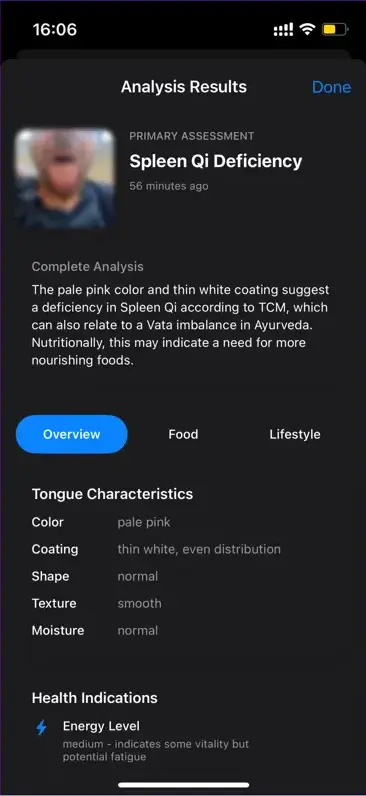
In Traditional Chinese Medicine, a thick white coat points to a cold or damp pattern, often tied to weak digestion. Practitioners read it as fluid and food that the body is not transforming well. The advice is usually warm, cooked, simple food, fewer cold drinks and raw meals, and less dairy and sugar until the coat thins.
Ayurveda reaches a similar conclusion through a different map, calling the film ama, the residue of incomplete digestion. Both traditions treat a heavy white morning coat as the gut's report card. The fix in both is gentle: warm water, ginger, lighter meals, and time. A coat that responds to those changes was telling you about digestion all along.
How do you get rid of a white tongue?
Scrape the tongue from back to front two or three times each morning, brush twice daily, and drink enough water to keep saliva flowing. Cut back on smoking, alcohol and sugar, and breathe through your nose at night. Most white coating clears within one to two weeks once dehydration and debris are handled.
A stainless steel scraper outperforms a brush for the coat itself. Pair it with more fiber, which mechanically cleans the surface as you chew, and fewer late, heavy meals that sit overnight. If the coat holds despite two clean weeks, stop experimenting and get it looked at. Persistence is the symptom that earns a professional opinion.
Key takeaways
- A thin white film is normal; a thick coat that returns fast points to dehydration, debris or sluggish digestion.
- Thrush patches look like cottage cheese, resist scraping, and may bleed or hurt.
- TCM and Ayurveda both read a heavy white coat as a sign of weak digestion.
- Scraping, brushing, water and lighter meals clear most coating in one to two weeks.
- A white patch that will not scrape off after two weeks needs a doctor or dentist.
Frequently asked questions
- Is a white tongue serious?
- Usually not. Most white coating is harmless buildup that clears with scraping and hydration. It becomes serious when patches will not wipe off, when they hurt or bleed, or when the coat lasts more than two weeks. Those signs can point to thrush or leukoplakia and call for a professional exam.
- Can dehydration cause a white tongue?
- Yes. When you are short on water, saliva production drops and the mouth cannot rinse away the bacteria and dead cells that form the coating. The film thickens and looks whiter. Drinking more water through the day, especially after sleep, alcohol or salty food, is the fastest first fix for a pale, dry-looking tongue.
- Does a white tongue mean a vitamin deficiency?
- White coating itself is rarely about vitamins. The deficiency picture is the opposite, a smooth, glossy, red tongue that has lost its coating and bumps, which can signal low B12, folate or iron. If your tongue looks slick and sore rather than coated, ask your doctor for a blood panel.
- How is thrush different from normal coating?
- Normal coating wipes off and leaves healthy pink underneath. Thrush forms thicker, creamy patches that cling, may spread to the cheeks and roof of the mouth, and can leave a raw red spot when rubbed. Thrush often follows antibiotics, inhaler use or diabetes, and usually needs antifungal treatment from a clinician.
TCM & Ayurveda Research, BigBalli. We translate traditional tongue reading into daily guidance, cross-checked against sources including the Mayo Clinic and Cleveland Clinic.
TongueAnalyzer provides wellness and educational information, not medical diagnosis or treatment. White patches that will not scrape off, sores, or any change lasting more than two weeks should be examined by a doctor or dentist.