What Is a Chronometer?
Chronometer is one of the few words on a watch dial that carries a legally defined meaning in Switzerland. It does not describe a style, a complication or a price bracket. It means a specific movement was submitted to an independent laboratory, ran a defined protocol and stayed inside published tolerances.
What does COSC actually test?
The Contrôle Officiel Suisse des Chronomètres runs each movement for 15 days across five positions, dial up, dial down, crown left, crown up and crown down, at 8, 23 and 38 degrees Celsius. Seven criteria are measured, of which average daily rate between −4 and +6 seconds is the best known.
The other six matter more than enthusiasts usually credit. They cover mean variation between positions, the greatest single deviation, the difference between horizontal and vertical rates, and the change in rate with temperature. A movement can average within tolerance and still fail on consistency.
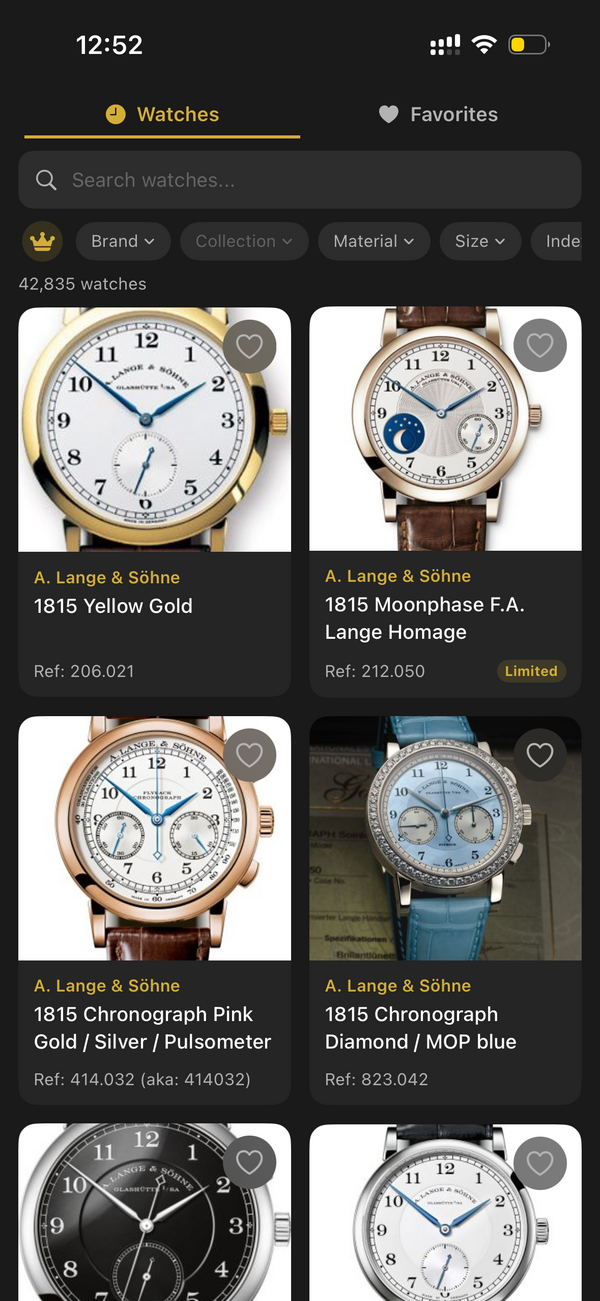
Is a chronometer the same as a chronograph?
No, and the two are constantly confused. A chronograph is a complication, a stopwatch function operated by pushers. A chronometer is a certification of accuracy. A watch can be one, both or neither, and the words share only their Greek root relating to time.
The practical distinction is that chronograph is visible on the dial as subdials and pushers, while chronometer is invisible and must be attested. Many chronographs are not chronometers, and most chronometers are simple time-and-date watches.
What is the new Excellence Chronometer standard?
COSC announced a second, stricter tier in 2026 called Excellence Chronometer, requiring −2 to +4 seconds per day, resistance to 200 gauss of magnetism, and verification that stated power reserve matches reality. It tests fully assembled watches rather than bare movements.
That last point is the substantive change. Standard certification tests an uncased movement, so a movement can pass and then perform differently once cased with its dial, hands and bracelet. The Excellence protocol adds five days on robotic wrist-simulation systems with the watch fully assembled. It was unveiled at Watches and Wonders in April 2026, with the first certified watches expected at retail from October 2026.
Do non-Swiss watches get certified?
COSC certifies movements regardless of the brand’s nationality, but in practice its throughput is dominated by Swiss houses. Other testing regimes exist, including the Japanese chronometer standards used by some Grand Seiko movements and the METAS Master Chronometer certification used by Omega.
METAS is worth distinguishing because it builds on COSC rather than replacing it: a movement must already hold COSC certification, then passes further tests including 15,000 gauss magnetic exposure. Several brands also run private internal standards, which are not independently verified and should be read differently.
Key takeaways
- Chronometer is a certified test result under ISO 3159, not a marketing description.
- COSC tests 15 days, five positions, three temperatures, against seven separate criteria.
- The headline tolerance is an average daily rate between −4 and +6 seconds.
- A chronograph is a stopwatch complication and has nothing to do with certification.
- COSC’s Excellence Chronometer tier tightens this to −2 to +4 seconds on assembled watches.
Frequently asked questions
- Does chronometer certification make a watch more expensive?
- It adds cost, since certification is paid per movement and requires movements built to tighter tolerances in the first place. The premium is usually modest relative to the watch price. Certification is more common at higher price points, but plenty of accessible watches carry it.
- Can a watch lose its chronometer status over time?
- The certificate applies to the movement as tested and is not revoked, but real-world accuracy drifts as lubricants age and the watch is knocked or magnetised. A ten-year-old unserviced chronometer may run well outside its original tolerance. Certification describes the movement at one moment.
- Are quartz chronometers a thing?
- Yes. COSC operates a separate protocol for quartz movements with far tighter tolerances, on the order of fractions of a second per day, tested over a shorter period. Quartz chronometers are uncommon because most quartz watches already exceed mechanical accuracy without certification.
- How accurate is a good non-certified mechanical watch?
- Many uncertified movements from reputable makers run within roughly ten seconds a day, which is close to chronometer territory. The difference certification buys is independent verification and consistency across positions, rather than a guarantee that an uncertified watch is inaccurate.
Watchmaking & Reference, BigBalli. We maintain specification and movement data across thousands of references, cross-checked against COSC, ISO standards and manufacturer documentation.