How Can I Track My Partner's Cycle Respectfully?
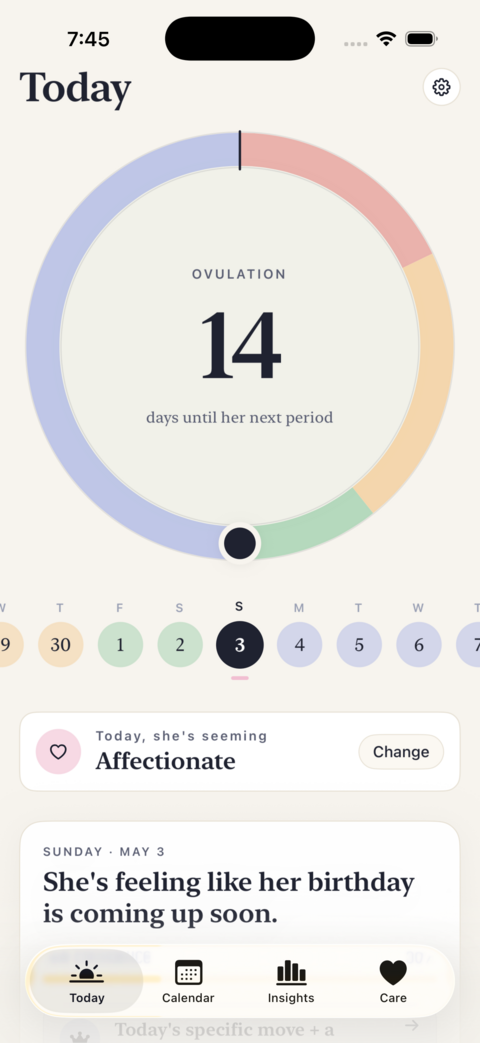
Tracking a partner's cycle is helpful when the goal is better timing and care, and harmful when it becomes surveillance or a way to dismiss her feelings. The difference is intent, consent and how you use what you learn. Done openly, it is just attentiveness with a calendar. Attune is built to keep that data private and to point it toward thoughtfulness.
Is it okay to track your partner's cycle?
Yes, when it is transparent and aimed at being a better partner. Tracking crosses a line if it is secret, used to explain away her emotions, or treated as a tool to predict and manage her. The healthy version is openly knowing roughly where she is in her cycle so you can time support, plan around hard days, and remember key dates.
Consent is the dividing line. Quietly noting her cycle to be more considerate is different from monitoring her without her knowledge. The simplest test: would she be comfortable if she saw exactly what you track and why. If yes, you are being attentive. If the honest answer is no, the tracking has drifted into something else.
How do you talk to her about it?
Be direct and frame it around care. Say you want to be more thoughtful about timing, comfort and important dates, and that you are keeping a private read on her cycle to do that. Ask what she is comfortable with, what helps, and what crosses a line for her. Let her opt in, and adjust to whatever she prefers.
Many partners are glad to be understood rather than guessed at, especially when the framing is "I want to show up better" instead of "I want to predict you." The conversation also surfaces her preferences directly, which is more accurate than any app. Keep the door open so she can change the boundaries later.
How do you keep the data private?
Use a tool that stores data on your device rather than a shared social profile or a server-side account. Avoid syncing cycle details into shared calendars or family accounts where others can see them. Keep notes minimal and factual. The goal is a private aid for you, not a record anyone else can browse or that lives in a marketing database.
Privacy is both respectful and practical. Cycle and health data is sensitive, and where it lives matters. Attune keeps data on device and, if you use iCloud, in your private container, with no shared feed and no public profile. That design keeps the information close to the relationship, which is exactly where it belongs.
How do you use the information well?
Use it to time support, plan ahead and stay patient, never to dismiss her feelings or win a disagreement. Take chores off her plate during a likely heavy week, remember key dates, and offer comfort early. Never say her reaction is "just her cycle." Treat the phase as quiet context that shapes how you help, not as an explanation you announce.
The fastest way to ruin good intentions is to use the cycle as a rhetorical weapon. Even when hormones are part of a hard day, naming them out loud invalidates her. Keep the read internal and let it guide your actions. The measure of doing this well is that she feels more supported, not more analyzed.
Key takeaways
- Transparent, consented tracking is attentiveness; secret monitoring is surveillance.
- Tell her why you track, ask her boundaries, and let her opt in.
- Keep data on device, out of shared calendars and public profiles.
- Use the read to time care and remember dates, never to dismiss her feelings.
- The test of doing it well: she feels more supported, not more analyzed.
Frequently asked questions
- Should I tell her I'm tracking her cycle?
- Yes. Transparency is what separates thoughtful attentiveness from secret monitoring. Tell her you want to be more considerate about timing, comfort and key dates, and that you are keeping a private read to do it. Ask what she is comfortable with. Most partners respond well to being understood, especially when the framing is care rather than control.
- Isn't tracking her cycle controlling?
- It can be, if it is secret, used to dismiss her feelings, or treated as a way to predict and manage her. It is not controlling when it is open, consented, and used to be more supportive. Intent and consent decide it. The honest test is whether she would be comfortable seeing exactly what you track and why.
- Where should the data live?
- On your own device, not in a shared social profile, family calendar or marketing database. Cycle and health information is sensitive, so keep it private and minimal. Attune stores data on device and, with iCloud, in your private container, with no shared feed and no server-side profile, which keeps it close to the relationship.
- What should I never do with the information?
- Never use it to dismiss a valid feeling by calling it "just her cycle," and never use it to win an argument. Keep the read internal and let it guide your actions, like easing her week or remembering a date. Used as a weapon it destroys trust; used quietly it makes you more considerate.
Cycle Literacy & Relationship Research, BigBalli. We translate cycle science into practical, respectful guidance for partners, cross-checked against sources including ACOG and the Office on Women's Health.
Attune provides educational and relationship guidance, not medical advice. Tracking should always be consensual and respectful. If your partner is uncomfortable with it, stop. Cycle data is sensitive; keep it private and use it only to be more supportive.