Why Does My Partner Get Moody Before Her Period?
If your partner gets irritable, tearful or low in the days before her period, there is a clear biological reason. The late luteal phase brings a steep hormone drop that ripples into mood, sleep and appetite. Recognizing the timing helps you respond with patience instead of confusion, and Attune makes that timing visible so a rough day rarely catches you off guard.
Why does mood change before a period?
In the late luteal phase, both estrogen and progesterone fall sharply as the body prepares to shed the uterine lining. Estrogen supports serotonin, a brain chemical linked to mood, so its decline can lower mood and patience. This hormonal shift, not a personality change, drives the irritability, sadness or tension many people feel premenstrually.
This is the core of premenstrual syndrome, which affects most menstruating people to some degree. The Office on Women's Health attributes PMS symptoms to these cyclical hormone changes. Understanding it as biology reframes the week: she is not being difficult on purpose, she is riding a predictable chemical low that will lift on schedule.
When do premenstrual mood changes happen?
They cluster in the luteal phase, mainly the five to seven days before the period, and usually fade within a day or two after bleeding begins. This tight timing is the signature of premenstrual mood symptoms. If low mood or irritability is present all month rather than concentrated before the period, the cause is likely something other than the cycle.
That timing test is genuinely useful. Mood that reliably dips premenstrually and recovers once the period starts fits PMS. Mood that stays low regardless of phase points toward stress, sleep, or a mood condition worth a clinician's attention. Tracking across a couple of cycles is the fastest way to tell which pattern you are seeing.
Is it PMS or something more serious?
Most premenstrual mood change is ordinary PMS: real but manageable. When mood symptoms become severe, with intense irritability, anxiety, hopelessness or anger that disrupts work and relationships and then lifts after the period, it may be PMDD, premenstrual dysphoric disorder. PMDD is a recognized diagnosis that needs medical care, not just patience.
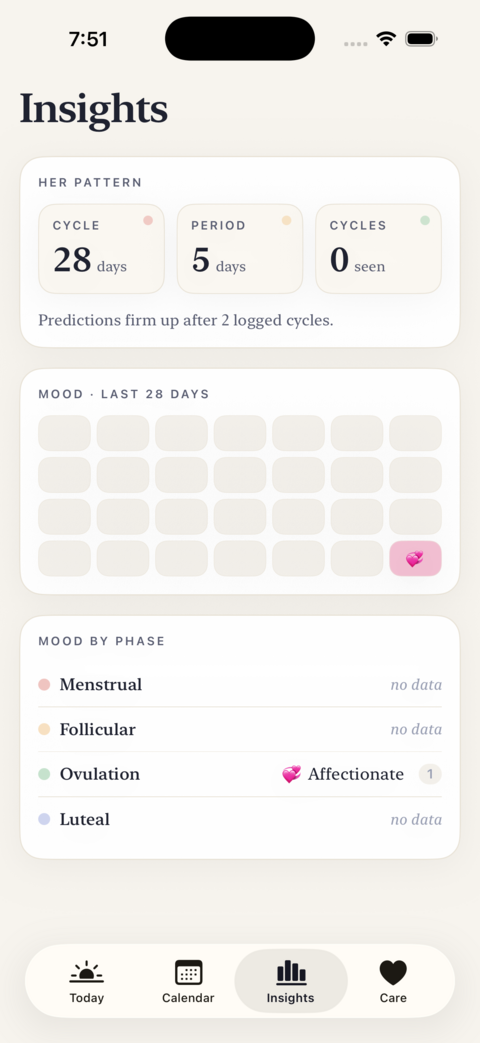
The dividing line is severity and impact, not the presence of symptoms. If hard premenstrual days are derailing her life or the relationship every cycle, that is worth a doctor's visit. A daily mood log lined up with her cycle gives a clinician exactly the evidence they need, and it is the kind of record Attune is built to produce.
How should you respond when she is moody before her period?
Lead with patience and lighten her load. Take on chores, protect her sleep, offer comfort, and listen without rushing to fix. Crucially, do not blame her feelings on her period out loud, since that invalidates real emotions and reliably backfires. Keep the cycle context internal and let it make you steadier, not dismissive, during a hard week.
The worst move is "you're just hormonal," which turns understanding into an insult. Even when the cycle is part of the picture, her feelings are still valid and often pointing at something real. Respond to the feeling, ease the friction, and let the week pass. Steady, low-drama support is what she will remember.
Key takeaways
- Premenstrual mood change comes from a steep late-luteal drop in estrogen and progesterone.
- Falling estrogen lowers serotonin, which affects mood and patience.
- Symptoms cluster in the days before the period and ease soon after it starts.
- All-month low mood points to something other than the cycle.
- Respond with patience and a lighter load; never call her "just hormonal."
Frequently asked questions
- Are premenstrual mood swings real or an excuse?
- They are real and biological. The sharp drop in estrogen and progesterone before a period affects mood-related brain chemicals like serotonin, which can cause irritability, sadness or tension. This is the basis of PMS, which affects most menstruating people. Treating it as legitimate, not an excuse, is both accurate and the foundation of a supportive response.
- How long do the mood changes last?
- Usually a few days. Premenstrual mood symptoms tend to appear in the five to seven days before the period and ease within a day or two of bleeding starting. If low or irritable mood persists throughout the whole month rather than clustering before the period, the cause is probably something other than the cycle.
- When should we be concerned?
- Be concerned when premenstrual mood symptoms are severe enough to disrupt work, daily life or the relationship every cycle, which can indicate PMDD. Also seek help if there is any thought of self-harm. A daily mood log tied to her cycle gives a doctor clear evidence, and PMDD has effective treatments worth pursuing.
- What is the worst thing I can say?
- "You're just hormonal" or "are you on your period" used to dismiss a feeling. It reframes a valid emotion as a glitch and almost always escalates things. Even when the cycle is involved, respond to the feeling itself, ease her load, and keep the cycle context to yourself. That lands far better than a diagnosis.
Cycle Literacy & Relationship Research, BigBalli. We translate cycle science into practical, respectful guidance for partners, cross-checked against sources including the Office on Women's Health and the NHS.
Attune provides educational and relationship guidance, not medical advice or diagnosis. If premenstrual mood symptoms are severe, disrupt daily life, or include any thoughts of self-harm, contact a qualified healthcare professional or a crisis line promptly.