What Is the Difference Between PMS and PMDD?
PMS and PMDD live on the same timeline but differ sharply in intensity. PMS is uncomfortable and manageable for most people. PMDD is a recognized condition that can derail a week and strain a relationship. Knowing which pattern you are seeing changes how a partner responds, and tracking when symptoms cluster is the clearest way to tell them apart.
What is the difference between PMS and PMDD?
PMS, premenstrual syndrome, brings mild to moderate symptoms like bloating, fatigue, irritability and tender breasts before a period. PMDD, premenstrual dysphoric disorder, is a severe variant where mood symptoms dominate: intense irritability, depression, anxiety or anger strong enough to impair daily life. PMDD is far less common and is listed as a diagnosis in the DSM-5.
The line is severity and impact, not symptom type. Roughly three in four menstruating people report some PMS, while PMDD affects a small minority. The International Association for Premenstrual Disorders stresses that PMDD is a real disorder rooted in an abnormal reaction to normal hormone shifts, not a character flaw or weakness.
What are the symptoms of PMDD?
PMDD centers on mood: marked irritability or anger, depressed mood or hopelessness, anxiety or feeling on edge, and mood swings with tearfulness. Physical symptoms like fatigue, appetite change and joint or muscle pain often come too. The defining features are intensity and timing, with symptoms appearing in the luteal phase and lifting within days of the period starting.
That cyclical timing is the signature. If severe mood symptoms reliably arrive before the period and fade once it begins, month after month, that pattern points toward PMDD rather than a constant mood condition. The Office on Women's Health notes the symptoms can be disabling and deserve medical attention, not stoic endurance.
How can tracking tell PMS and PMDD apart?
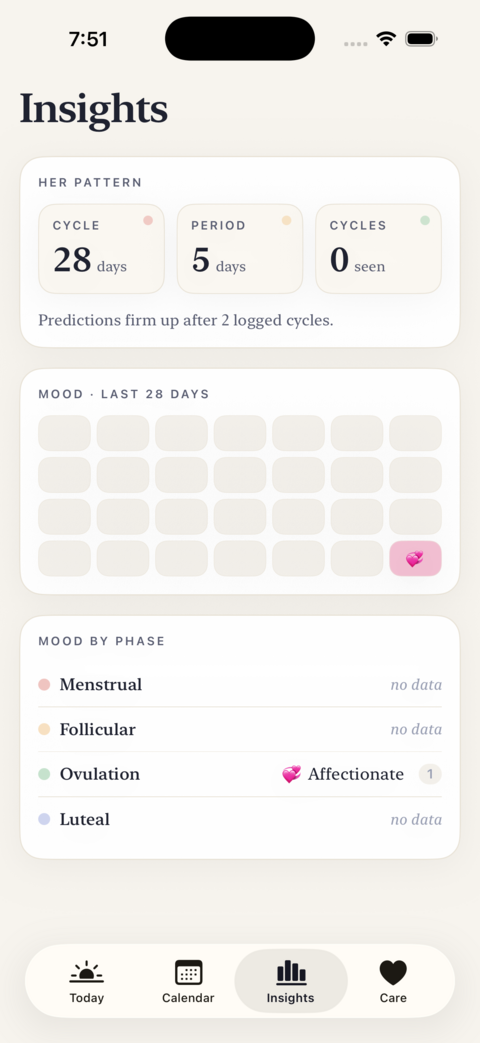
The clearest test is prospective tracking across at least two cycles. Log mood daily and line it up with cycle phase. PMS shows mild symptoms clustered before the period. PMDD shows severe mood symptoms tightly tied to the luteal phase that vanish soon after bleeding starts. Symptoms present all month point to something other than a premenstrual disorder.
Clinicians rely on exactly this kind of daily record to diagnose PMDD, because memory alone blurs the pattern. A partner who logs mood by phase builds a record that is genuinely useful in a doctor's office. Attune is designed for this, making the timing relationship visible instead of leaving it to recollection.
How should a partner respond to PMDD?
Take it seriously as a medical condition, not a mood to wait out. Encourage and support a doctor's visit, since PMDD has real treatments including lifestyle changes, certain antidepressants and hormonal options. During luteal-phase episodes, reduce friction, avoid escalating conflict, and remember the intensity is driven by a hormone-sensitive disorder, not by you.
Validation matters more than problem-solving in the moment. Saying the difficulty is real, and that help exists, lands better than minimizing it. PMDD is treatable, and many people improve significantly with care. A partner's steady, informed support, plus a push toward professional help, is one of the most useful things you can offer.
Key takeaways
- PMS is common and mild to moderate; PMDD is rare, severe and a formal diagnosis.
- PMDD is defined by intense mood symptoms tied to the luteal phase.
- Both ease soon after the period starts; symptoms all month point elsewhere.
- Daily mood tracking across two cycles is how clinicians distinguish the two.
- PMDD is treatable; encourage a doctor's visit and respond with validation.
Frequently asked questions
- Is PMDD just severe PMS?
- They overlap but are not the same. PMDD is recognized as a distinct disorder in the DSM-5, defined by severe mood symptoms like marked irritability, depression or anxiety that impair daily life and resolve after the period. PMS is the milder, far more common cluster. The key differences are intensity, mood dominance and the level of disruption.
- How is PMDD diagnosed?
- Diagnosis relies on prospective daily symptom tracking across at least two menstrual cycles, confirming that severe mood symptoms appear in the luteal phase and lift after the period starts. A clinician reviews that record and rules out other conditions. A consistent mood-by-phase log, like the one Attune builds, makes that assessment far easier.
- Can PMDD be treated?
- Yes. Treatment options include lifestyle measures such as sleep, exercise and reduced caffeine, certain SSRIs taken continuously or only in the luteal phase, and hormonal approaches like specific birth control. A doctor tailors the plan. Many people see significant improvement, so PMDD should be treated rather than endured.
- What can I do as a partner?
- Take it seriously, encourage professional help, and avoid escalating conflict during luteal-phase episodes. Validate that the difficulty is real and tied to a hormone-sensitive condition, not to you. Practically, reduce friction that week and help her keep a symptom record. Steady, informed support paired with a push toward care helps most.
Cycle Literacy & Relationship Research, BigBalli. We translate cycle science into practical, respectful guidance for partners, cross-checked against sources including IAPMD and the Office on Women's Health.
Attune provides educational and relationship guidance, not medical advice or diagnosis. PMDD is a serious condition; if she has thoughts of self-harm or symptoms that disrupt daily life, contact a qualified healthcare professional or a crisis line right away.