How do you photograph totality 3 degrees above the horizon?
Last updated 2026-08-02
Use 400 to 600mm on full frame, mount a front solar filter for the partial phases, and remove it at second contact. Bracket the corona widely. A Sun at 2 to 12 degrees means thick atmosphere and unstable seeing, which rewards shorter focal lengths and a landscape composition.
Most eclipse photography advice assumes a Sun high in the sky. Spain on 12 August 2026 offers the opposite: totality between 2 and 12 degrees of altitude, with the corona hanging over a skyline and sunset colours wrapped around the horizon. That changes the equipment answer, and it opens a composition that a midday eclipse cannot give you.
What focal length frames the corona best?
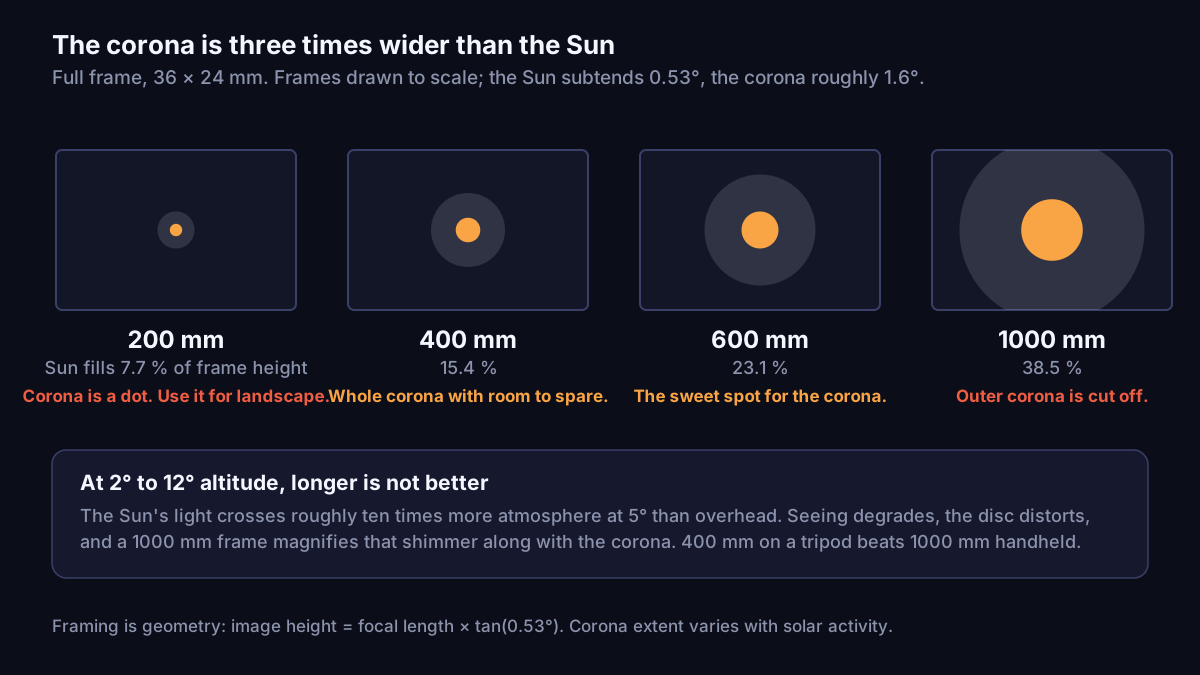
400 to 600mm on full frame. At 400mm the solar disc occupies 15.4 percent of the frame height, leaving the corona room to breathe. At 600mm the disc reaches 23.1 percent, which is close to ideal. At 1000mm it hits 38.5 percent and the outer corona falls outside the frame entirely.
The arithmetic is simple enough to do for your own kit. The Sun subtends 0.53 degrees, so its projected size is the focal length multiplied by the tangent of that angle. Divide by your sensor height to get the fraction of the frame. On an APS-C body multiply the effective reach by roughly 1.5, so 400mm behaves like 600mm did above.
The corona is the reason not to go longer. It extends several solar radii from the limb, so a frame that fits the disc handsomely will amputate the structure you actually came for.
Which exposure settings work at sunset?
Bracket rather than commit. ISO 200 at f/8 with a 1/500s base works for the filtered partial phases, with three stop bracketing to cover error. For totality itself the corona spans a brightness range no single exposure holds, so run from about 1/1000s to a full second and merge later.
Two adjustments for the low Sun. Ambient light is far below midday levels, so the unfiltered totality exposures land longer than the standard tables suggest. And the sky behind the corona will carry sunset colour rather than deep blue, which means white balance choices are aesthetic rather than corrective. Shoot raw and decide afterwards.
Set everything to manual before first contact. Autofocus will hunt against a low contrast disc, autoexposure will chase the changing sky, and the 90 seconds of totality is not the moment to discover either.
Do you need a solar filter for the camera?
Yes, for every second the photosphere is visible. A solar filter mounts over the front of the lens, ahead of all other elements, and protects the sensor and your eye at the viewfinder. It comes off at second contact and goes back on the instant the first bead of light returns at the far limb.
Never improvise this. A filter behind the lens, at the eyepiece or in a drop in slot sits at the focus of concentrated sunlight and will fail, with the eyepiece variant capable of causing injury. Front mounted filters from established solar filter makers are the only category worth using.
Practise the removal and replacement in daylight, with gloves if you plan to wear them, until it takes under three seconds and does not shift the composition. Second contact arrives on a schedule that does not accommodate fumbling.
Should you photograph it at all?
If this is your first total eclipse and you get 76 to 104 seconds, the honest answer is probably not. People routinely spend their only totality looking at a screen and troubleshooting a tripod head. The event is short, and photographs of it already exist in far better quality than a first attempt will produce.
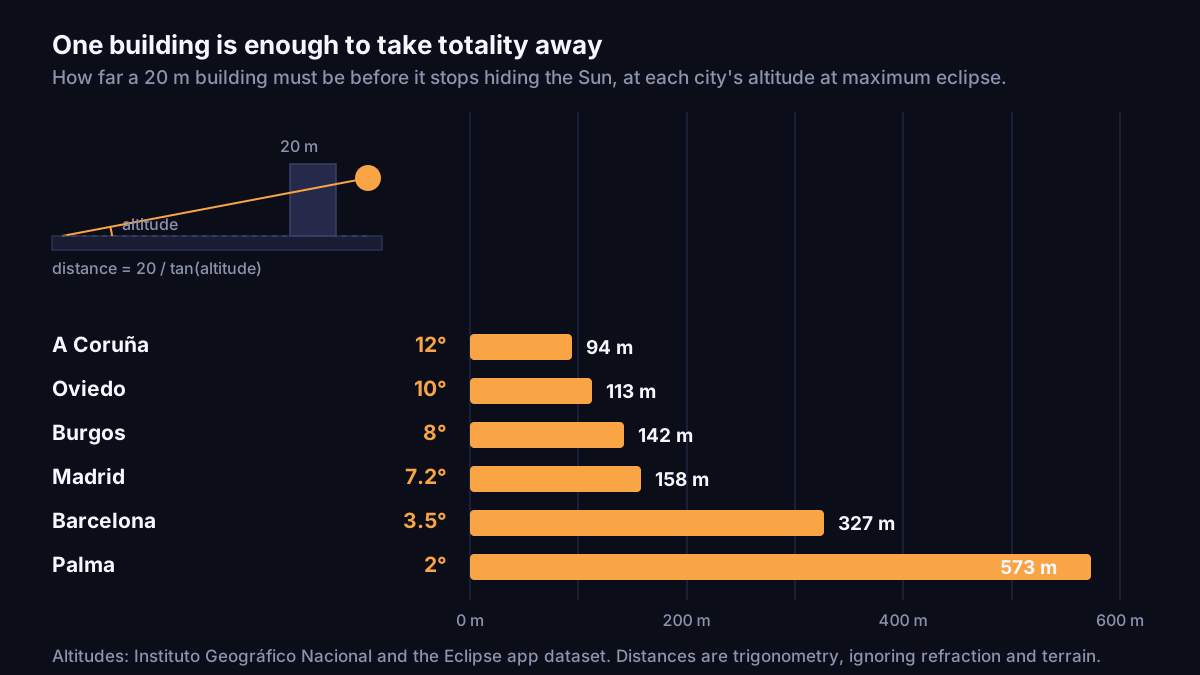
A middle path works well at this particular eclipse. Set one camera wide, framed on the horizon and the landscape, locked off on a tripod and running on an intervalometer. It needs no attention during totality, and the low Sun means the wide frame captures something genuinely uncommon: the corona above a recognisable place, with the shadow across the terrain and the horizon glowing in every direction. What that place looks like depends on where you go. Along the Cantabrian coast from A Coruña through Oviedo to Santander the horizon is open sea. Inland through Burgos, Palencia and Soria it is plateau and ridgeline. Over Mallorca the Sun is barely 2 degrees up, so almost anything on the skyline enters the frame. Then put the remote down and watch.
One more reason to keep the wide camera running. The Perseid meteor shower peaks around 12 August, which Sky & Telescope has called a double-header. If you have driven to a dark site in Castilla y León or Aragón for the eclipse, you are already standing somewhere worth staying after dark. The Sun sets minutes after totality, so the gap between the two events is short.
Eclipse gives the Sun's altitude and bearing for your exact position, so you can pre-frame a composition days ahead rather than hunting for the Sun at 20:28.

Key takeaways
- 400 to 600mm on full frame fits the whole corona. At 1000mm the disc fills 38.5 percent of the frame and the outer corona is cropped.
- Image height equals focal length times the tangent of 0.53 degrees, so you can size the Sun for any lens you own.
- A front mounted solar filter is required for every partial phase and comes off only for totality itself.
- Bracket the corona from roughly 1/1000s to one second. No single exposure holds its brightness range.
- A 2 to 12 degree Sun means thick atmosphere and shaky seeing, so a locked wide landscape frame often beats a long lens.
Frequently asked questions
What focal length should I use for the 2026 eclipse?
Between 400 and 600mm on full frame for the corona. At 400mm the solar disc fills 15.4 percent of the frame height and the corona sits comfortably inside it. At 1000mm the disc reaches 38.5 percent and the outer corona gets cropped away.
Do I need a solar filter on my camera?
Yes, for every partial phase. A front mounted solar filter protects both the sensor and your eye at the viewfinder. It comes off at second contact for totality, because the corona is roughly as bright as a full Moon, and goes back on the moment the photosphere returns.
What exposure settings work for totality?
Bracket widely rather than trusting one setting. ISO 200 at f/8 with 1/500s is a workable starting point for the filtered partial phases. The corona spans an enormous brightness range, so a bracket from roughly 1/1000s to a full second captures the inner and outer structure.
Should I photograph my first total eclipse at all?
Probably not, if it is your first and totality is under two minutes. Fumbling a tripod head costs the entire event. A defensible compromise is one camera on a locked wide composition running on an intervalometer, with your own eyes on the sky.