How Can You Tan Faster Without Burning?
Tanning faster is really about tanning efficiently: getting the most melanin per minute of sun while staying inside your burn window. That means good timing, good angle, and skin that is ready to tan. The fastest safe tan is built from short sessions stacked across days, with protection that lets each one run a little longer.
How can you speed up a tan without burning?
Tan in moderate UV, around index 3 to 6, where melanin builds quickly but burns come slowly. Expose more skin so you tan more area per session, angle yourself toward the sun, and flip on a timer for even color. Pair this with SPF 30 so the session can run longer. Efficiency, not intensity, is what speeds a safe tan.
The fastest melanin gain happens when skin is in direct sun at a useful UV without crossing into a burn. Push the UV too high and the session ends early in redness; keep it moderate and you bank steady color. Maximizing exposed area and good angle multiplies the effect, so you finish a fuller tan in the same number of minutes.
Does exfoliating help you tan faster?
Yes. Exfoliating before a session removes dead surface cells so UV reaches fresh, even skin, which tans more uniformly and looks deeper. It also helps the tan last, because a smooth surface sheds more slowly than flaky, uneven skin. Gentle exfoliation a day before, plus moisturizer after, keeps color richer and more even for longer.
A tan lives in the outer skin layer, so the condition of that layer decides how it looks. Dry, flaky skin scatters light and sheds early, dulling and patching the color. Removing the loose cells first and moisturizing after gives the tan a clean canvas and slows the turnover that fades it. The result reads as a faster, deeper tan even at the same UV dose.
Why does chair angle make a tan faster?
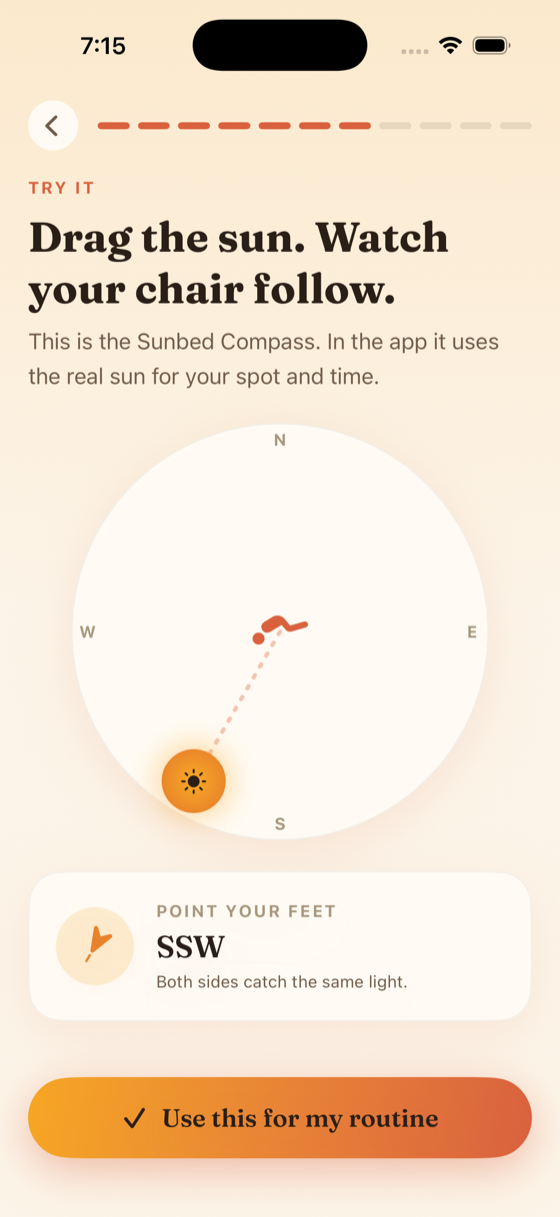
Skin facing the sun directly absorbs far more UV than skin at a steep angle, so orientation changes how fast you tan. Pointing your chair, towel or sunbed toward the sun puts more of your body in direct rays at once. Flipping on a schedule then spreads that strong exposure evenly, building color faster without overloading one side.
UV intensity on skin follows the angle of the light, the same reason midday sun is stronger than evening sun. A body angled away from the sun catches a glancing dose; a body squared to it catches the full one. Setting the right orientation once, then flipping to share it, is a free way to raise your effective UV without raising your burn risk.
What should you avoid when trying to tan fast?
Avoid the shortcuts that backfire: no-SPF tanning oils, baking at peak midday UV, and marathon sessions. Each speeds a burn more than a tan, and a burn peels color away within days. Skipping hydration and exfoliation also dulls results. The fast methods that work are timing, angle and repetition, not removing the protection that keeps a session going.
A burn is the enemy of a fast tan. It ends the session, forces the skin to shed early, and leaves blotches where it peeled, so you restart from behind. Tanning beds carry the same trap plus added risk, and major health agencies advise against them. Real speed comes from never burning, so each session adds to the last instead of erasing it.
Key takeaways
- Tan in moderate UV of about 3 to 6, where color builds fast and burns come slowly.
- Expose more skin, angle toward the sun, and flip on a timer for fast even color.
- Exfoliate before and moisturize after so UV hits fresh skin and the tan lasts.
- Chair angle changes your effective UV dose without raising burn risk.
- Avoid no-SPF oils, midday baking, marathon sessions and tanning beds.
Frequently asked questions
- What is the fastest way to get a tan safely?
- Tan in a moderate UV window, expose as much skin as you comfortably can, angle toward the sun, and flip on a timer for even color. Use SPF 30 so each session runs longer, and exfoliate beforehand. Then repeat short sessions across several days. That stack of efficient sessions beats one long, risky bake every time.
- Do tanning accelerators work?
- Some lotions add a temporary bronzer or moisturize the skin so a tan looks more even, which can help appearance. Products that intensify UV to speed a real tan also speed burns and damage. If you use an accelerator, choose one with broad-spectrum SPF and treat the color it gives as cosmetic rather than a safe way to skip protection.
- Does drinking water help you tan?
- Hydrated skin tans more evenly and holds color longer because it sheds more slowly than dry skin. Water does not make melanin form faster, but it keeps the outer skin layer healthy so the tan you build looks smooth and lasts. Drinking through a session also helps you avoid the fatigue and overheating that cut sessions short.
- Are tanning beds a faster option?
- They tan quickly but raise skin cancer risk significantly, and major health agencies including the CDC advise against them. The speed is not worth the damage, especially for younger skin. A faster outdoor tan from good timing, angle and repetition gives you the color without the concentrated UVA exposure that tanning beds deliver in every session.
UV, SPF & Tanning Research, BigBalli. We turn the UV index into a session you can follow, cross-checked against sources including the Skin Cancer Foundation and the CDC.
Ray Routine provides tanning and sun-exposure estimates to help you plan. It is not medical advice and does not diagnose or prevent any condition. People with a history of skin cancer or photosensitivity should follow their doctor's guidance.