What Is a Stoic Morning Routine?
The Stoics treated the morning as preparation. Marcus Aurelius opens book two of Meditations by bracing himself for the difficult people he will meet that day. The purpose is not to start the day relaxed but to start it ready. A few minutes of deliberate rehearsal changes how you meet the first hard moment, which often sets the tone for the rest.
What is a Stoic morning routine?
A Stoic morning routine is a brief mental preparation, not a meditation in the eyes-closed sense. You read a short passage, anticipate the day's likely challenges, and decide in advance how you want to respond. It primes your judgment before circumstances do, so you meet frustration with a plan instead of an impulse.
This differs from mindfulness meditation, which trains present-moment attention. The Stoic morning is closer to a coach's pregame talk: you remind yourself of your principles and run through the day. Both have value, and they pair well. The Stoic version is specifically aimed at conduct, preparing you to act according to your values under pressure.
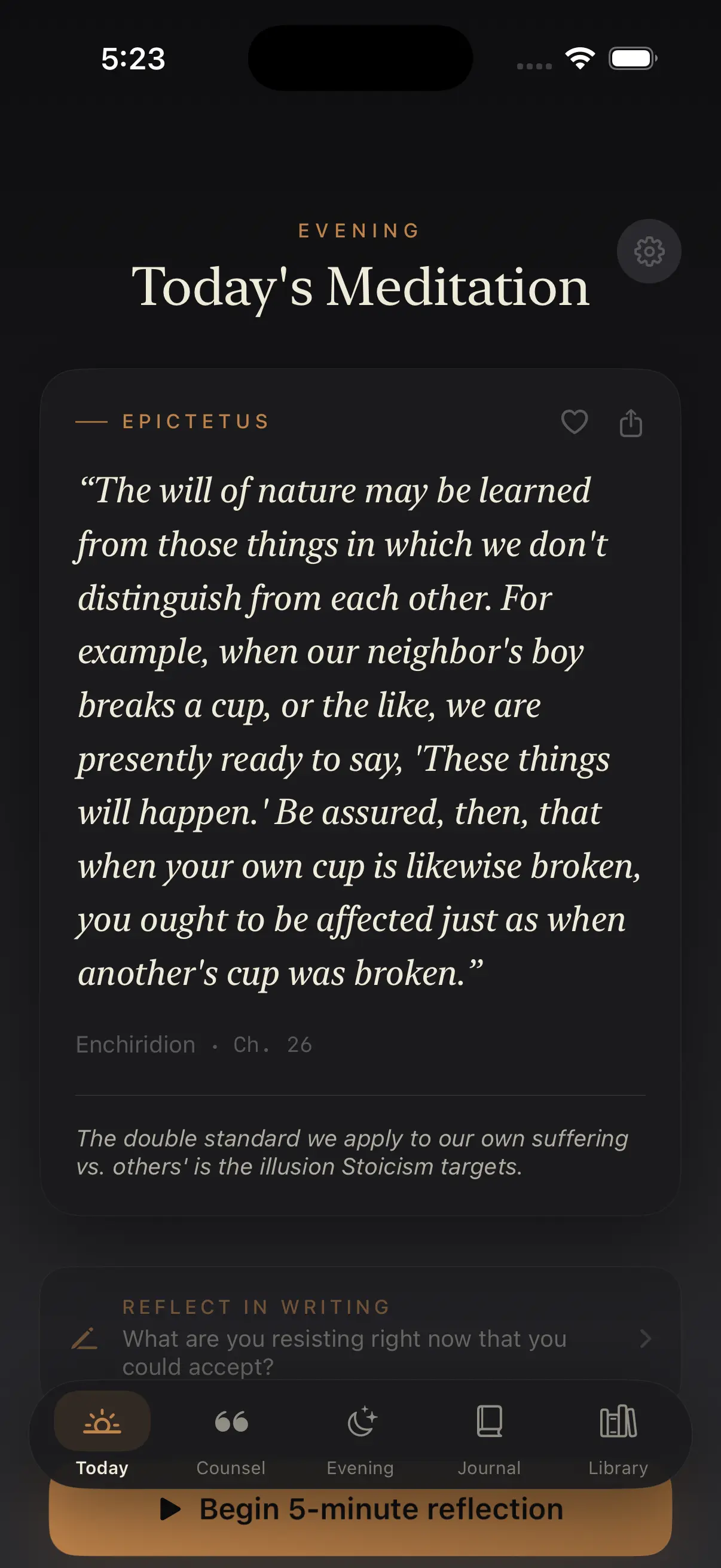
What are the steps of a Stoic morning practice?
Three steps, five minutes total. First, read one passage from Marcus, Seneca or Epictetus and let it settle. Second, rehearse the day: who or what might test you, and how will you respond well? Third, set a single intention tied to what you control. Then begin the day carrying that one resolution.
Keep each step small. The passage can be a few sentences. The rehearsal can be one anticipated difficulty, not an exhaustive forecast. The intention should be specific and within your power, like "I will listen before reacting in the meeting," not "the meeting will go well." Concrete and controllable beats vague and hopeful every time.
What is the morning premeditation Marcus used?
It is called premeditatio malorum, the premeditation of adversity. You calmly imagine the day's possible setbacks in advance, so they cannot ambush you. Marcus rehearsed meeting ungrateful and arrogant people each morning. The point is preparation, not pessimism: a difficulty you have already pictured loses its power to throw you off balance.
Done wrong, this becomes anxious catastrophizing. Done right, it is a brief, level-headed survey. You name a likely challenge, decide your response, and move on, without dwelling. Seneca recommended the same for larger fears, rehearsing loss and hardship in advance so that if they come, they arrive as expected guests rather than intruders.
How do you make a Stoic morning routine stick?
Anchor it to something you already do every morning, like the first cup of coffee or sitting down at your desk. Keep it to five minutes so it survives busy days. Use a reminder set for that time, and track a streak so a missed morning is visible. Resume immediately after any lapse without guilt.
Habits attach to existing cues more reliably than to willpower. Pairing the passage with coffee means the coffee triggers the practice. A visible streak adds gentle accountability, and a short routine is one you will actually keep. The Stoics valued steadiness over intensity, and a five-minute morning held for months outperforms an ambitious one abandoned in a week.
Key takeaways
- The Stoic morning prepares your judgment; it is rehearsal, not relaxation.
- Three steps in five minutes: read a passage, rehearse the day, set one intention.
- Premeditatio malorum means calmly previewing setbacks so they cannot ambush you.
- Make the intention specific and within your control.
- Anchor the routine to an existing morning habit and keep it short to make it stick.
Frequently asked questions
- How long should a Stoic morning routine take?
- About five minutes is plenty to start. Read one passage, rehearse a likely challenge, and set a single intention. The Stoics prized consistency over length, so a short routine you keep every day beats a long one you abandon. You can lengthen the reading or reflection later, once the habit is firmly in place.
- Is Stoic morning practice the same as meditation?
- Not quite. Mindfulness meditation trains present-moment attention, often with the eyes closed. The Stoic morning is an active mental rehearsal: reading a principle and preparing how to act on it. They complement each other well. If you already meditate, adding a Stoic passage and intention turns calm attention into a plan for conduct.
- What if I am not a morning person?
- The routine is short and undemanding, so it does not require peak alertness. Even a groggy two minutes of reading one passage and naming one intention works. If mornings are truly impossible, do the preparation whenever your day actually begins. The pairing with an existing cue, like coffee, matters more than the clock time.
- What should I read each morning?
- A short passage from Marcus Aurelius, Seneca or Epictetus, ideally one that fits how you feel or what the day holds. You do not need a fixed reading plan. Rotating brief passages by theme keeps it fresh and lets you pull something relevant. The aim is one idea to carry, not a chapter to finish.
Stoic Philosophy & Practice, BigBalli. We turn the primary Stoic texts into a daily discipline, citing Marcus Aurelius, Seneca and Epictetus from their own works.
Ataraxia offers philosophical and educational guidance, not medical or psychological treatment. If you are struggling with persistent distress, please consult a qualified clinician.