How Do You Tune a Musical Instrument?
Tuning is matching the pitch your instrument produces to a fixed reference, usually A=440 hertz. A chromatic tuner listens through the microphone, names the note it hears, and shows how many cents sharp or flat you are. You move the tuning slide, peg, or screw until the reading lands on zero. That is the whole task, repeated for each string or your single tuning pitch.
What is the right way to tune step by step?
Warm the instrument with a minute of playing, open the tuner, and sound one sustained note. Read the note name and the cents offset, then adjust slowly toward zero. Tune from your lowest reference pitch upward. Recheck the first note last, since adjusting one string can shift the others on guitar, violin, and cello.
Blow or bow a full, even tone rather than a clipped one. A clipped note gives the tuner less to read and the pitch can sag at the end. On wind instruments, push or pull the tuning slide. On strings, turn the peg for big changes and the fine tuner for the last few cents. Stop the moment the meter holds at zero.
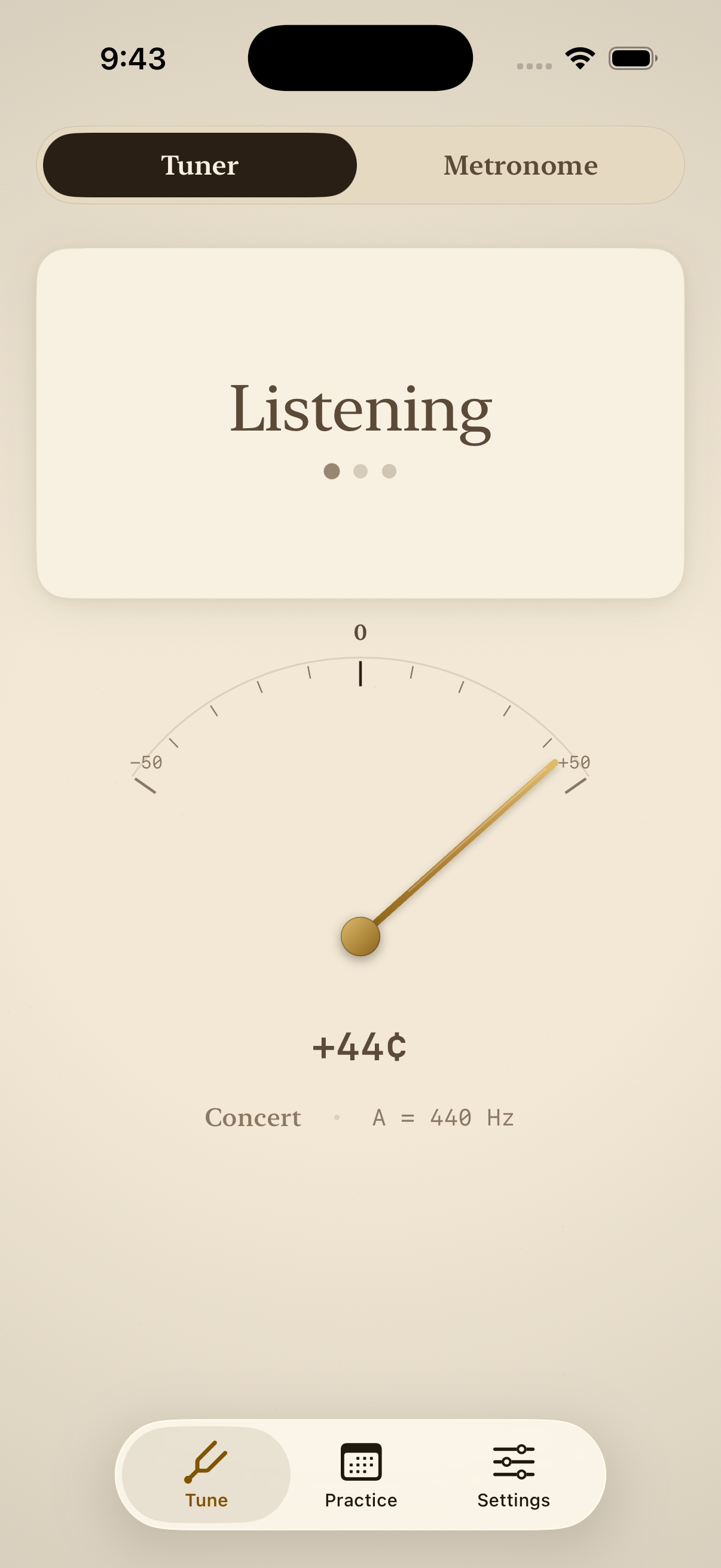
Should you tune to A=440?
A=440 hertz is the modern concert standard and the safe default for school bands, most orchestras, and solo practice. Some ensembles tune higher, often A=442 or A=443, for a brighter sound. Baroque groups drop to around A=415. Match whatever your conductor or section sets, and keep every player on the same reference.
If you practice alone, A=440 keeps you consistent with backing tracks, piano apps, and recordings. The number is just the frequency of the A above middle C. Pick it once and stay there for the session. The problem in a group is rarely the exact pitch, it is two players tuned to two different references, which no amount of skill can hide.
Why does your instrument go out of tune so fast?
Temperature is the main culprit. A cold instrument plays flat and rises as it warms, which is why a band sounds sharp after ten minutes under stage lights. New strings stretch and drop in pitch for days. Humidity swells wood. Hard playing and bumped pegs nudge things off, so retuning mid-rehearsal is normal, not a failure.
Brass and woodwinds shift with breath temperature and room heat. A trumpet you tuned cold will climb sharp once the tubing warms. Strings need a settling period after a change, and you should stretch them gently and retune several times. None of this means your instrument is broken. It means pitch is physical, and checking it often is part of playing well.
Can you tune by ear instead of a tuner?
Yes, and it is a skill worth building. Tune one reference pitch with a tuner, then match the rest by listening for beats, the wavering pulse you hear when two notes are close but not identical. When the beats slow and vanish, the notes agree. Use the tuner to check yourself until your ear is reliable.
Ear tuning trains the same listening you need to play in tune within a section, where intonation is relative, not absolute. Start with octaves and fifths, which have the clearest beats. A tuner and your ear are partners. The meter gives you a true anchor, and your ear learns what that anchor feels like so you can hold pitch when no screen is in front of you.
Key takeaways
- Play a full, sustained note and adjust until the tuner reads zero cents on the right pitch.
- A=440 is the default; match your group if they tune to 442 or another reference.
- Tune from your lowest reference upward and recheck the first note last.
- Cold instruments play flat and rise as they warm, so retuning mid-rehearsal is normal.
- Use the tuner to anchor one pitch, then train your ear to match the rest.
Frequently asked questions
- How often should I tune during practice?
- Tune at the start, again after about ten minutes once the instrument has warmed, and any time a passage sounds off. Strings drift more than brass, and new strings drift most. A quick check every fifteen or twenty minutes keeps you honest without interrupting the flow of a practice session.
- Why does the tuner jump between two notes?
- A jumping reading usually means an unsteady tone, background noise, or a pitch sitting almost exactly between two notes. Play a louder, longer, more even note and move to a quiet room. If it still flickers, you are likely a quarter step off, so adjust firmly in one direction until the tuner locks onto a single note name.
- Do I need to warm up before tuning?
- Yes. A cold instrument plays flat and will rise as it warms, so tuning cold means going sharp ten minutes later. Play for about a minute first, then tune. This is most noticeable on brass and woodwinds, where breath and room temperature change the pitch of the tubing quickly.
- Is tuning to 442 wrong?
- No. Many professional orchestras tune to A=442 or higher for a brighter sound, and it is a deliberate choice, not an error. What matters is that everyone uses the same reference. If your ensemble tunes to 442, set your tuner to 442 so you match the group rather than the textbook default of 440.
Music Education & Practice Research, BigBalli. We turn everyday tuning, tempo, and practice questions into clear guidance for students, parents, and private teachers.
PitchLab is a practice and tuning tool for musicians. Tuning references and ensemble pitch should always follow the instructions of your conductor, section leader, or teacher.