Why Do Single-Pigment Paints Mix Cleaner?
The cleanest mixers on your palette are almost always single-pigment paints. The reason is arithmetic. When you blend two single pigments you get a two-pigment mix. When you blend two convenience colors that each already hold two pigments, you get four, and four-pigment mixes go gray fast. Reading the ingredient line is how you keep mixes bright.
What makes a paint a single pigment?
A single-pigment paint lists exactly one Color Index code, like PB29 alone for ultramarine. A mixed or convenience paint lists two or more, such as PB15 plus PY3 for a ready-made green. The single code means one colorant drives the color, which makes the paint behave predictably whenever you mix it with something else.
Convenience colors exist because painters want certain results out of the tube without mixing them, a particular sap green or flesh tone. They are not inferior to use straight; they are pre-mixed. The difference matters the moment you try to mix from them, because you inherit every pigment they contain as a hidden ingredient in your blend.
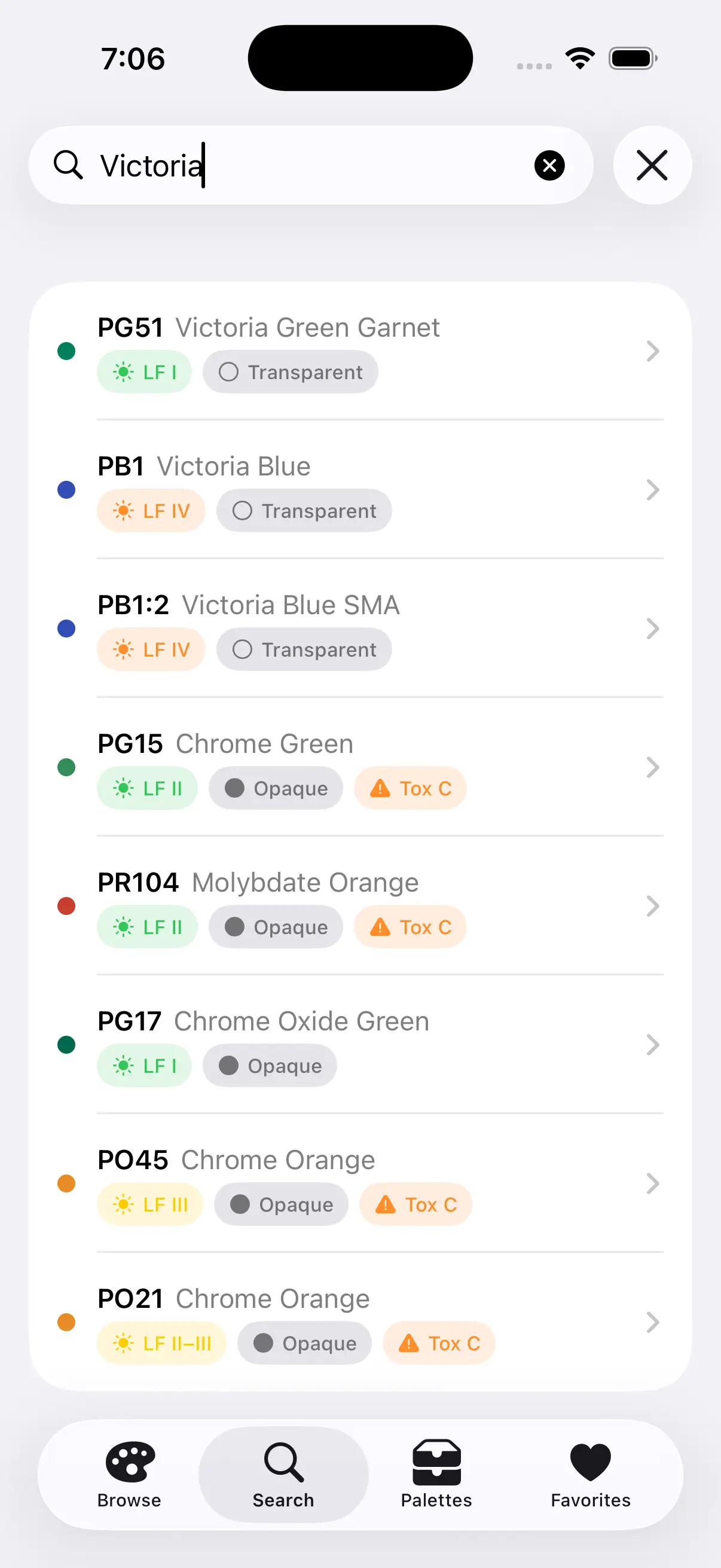
Why do single pigments mix cleaner?
Every pigment you add to a mix subtracts more light, pushing the result toward gray. Two single pigments make a two-component mix that stays relatively bright. Two convenience colors, each holding two or three pigments, can stack to five or six components in one blend, and the chroma collapses. Fewer pigments in, brighter color out.
This is subtractive color in action. Each pigment absorbs part of the spectrum; pile up enough and they absorb nearly everything, which we see as mud. Master colorists keep mixes to two, sometimes three, pigments for exactly this reason. Starting from single-pigment paints is what makes that discipline possible, because you always know how many colorants are really in the pot.
When are convenience mixes the right call?
Convenience colors win when you need a specific result repeatedly and do not plan to mix far from it: a landscape green, a portrait shadow, a favorite purple. They save time and ensure consistency. The rule of thumb is to use them as endpoints, the color you apply, rather than as building blocks you mix heavily into other colors.
A working palette can hold both. Keep a core of single-pigment primaries and earths for mixing, then add a few convenience colors for repeated, recognizable notes. The mistake is mixing two convenience colors together and wondering why the result died. Use them straight or barely modified, and they earn their place without dragging your chroma down.
How do you build a clean single-pigment palette?
Start with a warm and cool of each primary, all single pigments: a cool red and warm red, cool and warm yellow, cool and warm blue, plus titanium white. Add one or two single-pigment earths. This compact set mixes a vast range while keeping every blend to two or three colorants, so your mixes stay clean and repeatable.
From that core, most targets are two pigments away. A muted green comes from a cool blue and warm yellow, a clean orange from warm red and warm yellow, a neutral from complements. Because each tube is a single pigment, you always know the exact count in the pot and can stop before the mix turns gray. The palette teaches color as you use it.
Key takeaways
- A single-pigment paint lists one Color Index code; a convenience color lists two or more.
- Single pigments mix cleaner because you control exactly how many colorants enter a blend.
- Mixing two convenience colors stacks pigments fast and turns the result to mud.
- Use convenience colors straight as endpoints, not as heavy mixing building blocks.
- A warm and cool of each primary in single pigments, plus white, mixes most targets cleanly.
Frequently asked questions
- How do I know if a paint is a single pigment?
- Read the ingredient line on the back of the tube. One Color Index code, like PR108 or PB29 by itself, means a single pigment. Two or more codes mean a mixture. The front-of-tube name does not tell you, since both single and mixed paints carry romantic names; only the code list is reliable.
- Are convenience colors bad for beginners?
- Not bad, but they can hide what is happening in a mix. Beginners learn color faster from single pigments because every result traces back to a known count of colorants. A few convenience colors are fine for specific needs; building the whole palette from them makes muddy mixes mysterious instead of explainable.
- Does a single pigment always mix brighter?
- It gives you the best chance, because you keep the pigment count low, but brightness also depends on the pigments you choose. Two single pigments far apart on the color wheel still neutralize each other toward gray. The advantage of single pigments is control: you decide the count and the partners, so mud becomes a choice rather than a surprise.
- Can I mix three single pigments and stay clean?
- Often yes, if two dominate and the third only adjusts. Three roughly equal pigments start to gray out, but a mix of two with a small touch of a third to shift hue or value usually holds its chroma. The practical limit is two strong components plus a minor correction, which keeps most mixes lively.
Color Chemistry & Materials Research, BigBalli. We read manufacturer ingredient lists so painters can build clean, single-pigment palettes that mix the way they expect.
Pigments provides reference and educational information about art materials and color mixing. Pigment counts and behavior vary by brand and binder; confirm the codes on your own tubes before relying on them.