How Do You Tell If a Pigment Is Transparent or Opaque?
Opacity decides whether a color sits on top of your painting or sinks into it. The same blue can hide a pencil line completely or float over it like stained glass, depending on the pigment. Knowing which is which changes how you layer, glaze and correct, and it is printed right on most tubes if you know the symbol to look for.
What does opacity actually mean for a pigment?
Opacity measures how much light a pigment layer blocks versus transmits. Opaque pigments scatter and absorb light at the surface, hiding what is beneath. Transparent pigments let light pass through, bounce off the layer below and return through the color, which is why glazes seem to glow. The pigment's particle size and refractive index drive this.
A high refractive index relative to the binder makes a pigment opaque; titanium dioxide is the textbook case and the reason titanium white covers so completely. Transparent organics like quinacridone and phthalocyanine have a refractive index close to the oil or acrylic around them, so light slips through. The chemistry sets the behavior before you ever touch a brush.
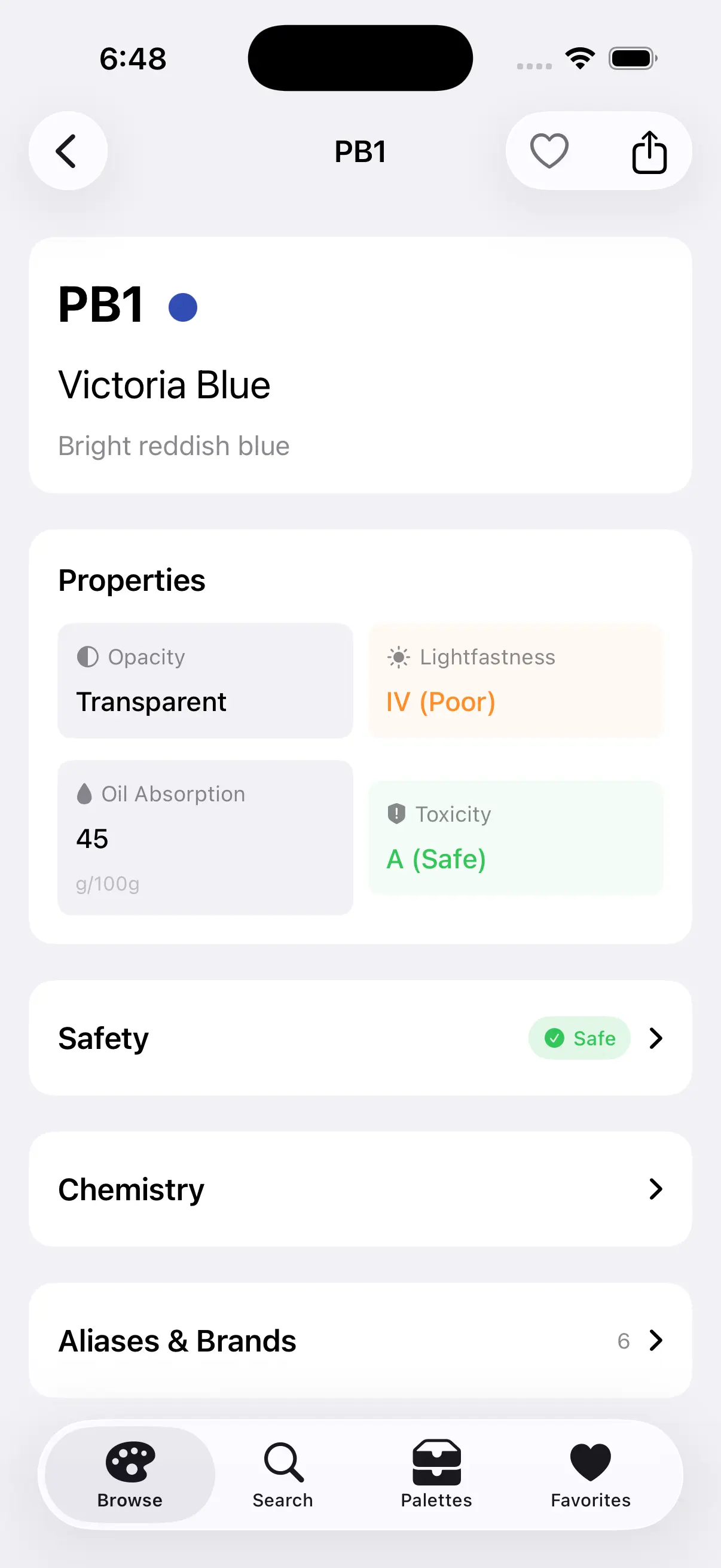
How do you read the opacity symbol on a tube?
Most makers print a small square near the pigment code. A solid filled square means opaque, a half-filled square means semi-transparent or semi-opaque, and an open square means transparent. Some brands add a diagonally split square for semi-opaque. The symbol sits beside the lightfastness rating and Color Index code on the back label.
These symbols are not perfectly standardized between brands, so the same pigment can read "semi-transparent" in one range and "transparent" in another depending on pigment load. Use the symbol as a guide, then confirm by swatching over a strip of black ink. Where the swatch hides the black, the paint is opaque; where the black shows through, it is transparent.
Which common pigments are transparent and which are opaque?
Transparent staples include the quinacridones (PR122, PV19), phthalo blue and green (PB15, PG7), and many earth glazes. Opaque staples include titanium white (PW6), the cadmiums (PY35, PR108), cobalt blue (PB28) and Naples yellow. Earths vary: transparent red oxide glazes, while yellow ochre and Indian red tend toward opaque.
A quick reference helps when you are building a layering palette:
| Behavior | Example pigments | Best use |
|---|---|---|
| Transparent | Quinacridone (PR122, PV19), phthalo (PB15, PG7) | Glazes, shadows, luminous layers |
| Semi-opaque | Ultramarine (PB29), viridian (PG18) | Mid layers, flexible mixing |
| Opaque | Titanium white (PW6), cadmiums (PR108, PY35) | Covering, highlights, corrections |
When should you reach for transparent versus opaque?
Reach for transparents when you glaze, build luminous shadows, or want layers to interact optically. Reach for opaques when you need to cover a mistake, paint a bright highlight over dark, or lighten a color with body. Watercolorists prize transparents for glow; oil and acrylic painters use both, opaque on top, transparent for depth.
The order matters in practice. A transparent glaze over an opaque underpainting deepens color without dulling it, which is how the old masters built flesh and fabric. An opaque touch over a transparent passage corrects or accents it. Knowing each tube's opacity turns layering from guesswork into a plan you can repeat.
Key takeaways
- Opacity is how much a pigment hides what is under it; it is set by particle chemistry.
- Opaque pigments cover and lighten; transparent pigments glaze and glow in layers.
- The tube symbol, a filled, half or open square, tells you the opacity at a glance.
- Quinacridones and phthalos are transparent; titanium white and cadmiums are opaque.
- Layer transparent over opaque for luminous depth, opaque over transparent to correct.
Frequently asked questions
- Does adding white make a transparent color opaque?
- Yes, partly. Mixing in an opaque white like titanium adds body and hides what is beneath, so the result covers more than the transparent pigment alone. The trade-off is that white also lightens and cools the color and can chalk it, so use it deliberately rather than as a default way to gain opacity.
- Are transparent pigments weaker?
- No. Many transparent pigments such as phthalo blue have enormous tinting strength and will dominate a mix from a tiny amount. Transparency describes how light passes through the layer, not how strongly the pigment colors a mixture. A transparent paint can be both see-through in a glaze and extremely potent on the palette.
- How do I test opacity at home?
- Draw a thick stripe of black waterproof ink on paper or canvas, let it dry, then paint each color across it at normal consistency. Where the black disappears, the paint is opaque; where it shows through clearly, the paint is transparent; partial coverage means semi-opaque. This simple swatch test outranks any printed symbol.
- Why does the same pigment look more opaque in oil than watercolor?
- Pigment load and binder differ. Oils carry more pigment in a film that sits up on the surface, while watercolor spreads thin and lets the white paper show through. The pigment is the same, but the medium changes how much light gets past it, which shifts the apparent opacity between the two paints.
Color Chemistry & Materials Research, BigBalli. We translate refractive-index data and manufacturer opacity ratings into plain layering guidance for painters.
Pigments provides reference and educational information about art materials. Opacity varies with pigment load, binder and dilution; swatch-test your own tubes for the most reliable result.