How do senior care franchises standardize technology across territories?
Senior care franchises standardize technology by configuring one shared platform with brand-level defaults, not by letting each territory pick its own tools.
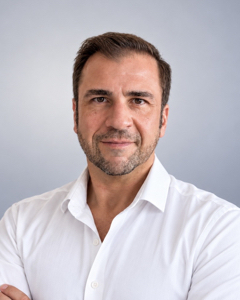
TL;DR: Senior care franchises standardize technology by mandating one configured core platform across every territory, not by letting independent owners each pick their own tools. I am Giacomo Balli, an independent advisor who helps non-technical franchisors and multi-territory owners choose, scope, and roll out home-care software without overbuilding or overpaying.
Technology consistency is a brand promise in home care, and most franchise networks break it by accident. A franchisor approves WellSky Personal Care at the top, then individual franchisees buy AxisCare, a spreadsheet, and three recruiting apps because nobody made the standard real. The result is fragmented data, broken brand compliance, and a royalty report that does not tie out. Standardization is a configuration and governance problem, not a software-shopping problem.
What does standardizing technology across territories actually mean?
Standardization means one system of record runs in every territory, configured once at the brand level, with the same EVV setup, care plan templates, and reporting formats. Franchisees turn it on rather than design it. Local flexibility lives at the edges, like a regional referral source list, never inside the agency management platform itself.
The brands that get this right, Home Instead, Comfort Keepers, Visiting Angels, Right at Home, and Senior Helpers among them, treat the core platform like the logo: not optional, not customized per owner. What varies between territories is staffing and market, not the software workflow a caregiver clocks into.
Should the franchisor mandate one software platform for all franchisees?
Mandate the core platform, the agency management and EVV system every territory runs on. WellSky Personal Care, AxisCare, or AlayaCare should be a brand standard, not a franchisee choice. Leave room for local extras like a regional referral tool, but never fragment the system of record across territories.
A mandate without a configured default is just a logo on a vendor contract. The franchisor has to ship the platform pre-built: brand care plan templates, standard EVV rules per state, default billing codes, and the exact reports royalties depend on. That is the work most networks skip, and it is where I spend the first weeks of an engagement.
Can a senior care franchise build custom software instead of buying?
Rarely worth it. EVV, scheduling, billing, and care plans are commodity features that WellSky, AxisCare, and AlayaCare already ship and keep compliant. Custom builds make sense only for a brand-owned recruiting or referral layer that no vendor offers. Configure the platform first, then build the thin missing piece.
I have watched owners in many industries fund a six-figure custom build to replace something a configured platform already did. The same pattern shows up in home care. If a vendor handles EVV compliance, your engineers should not. Where custom can pay off is a caregiver recruiting and retention app or a referral dashboard, a thin layer on top of the platform, not a replacement for it.
How do you get non-technical franchisees to adopt new technology?
Adoption follows configuration, not training decks. Ship the platform pre-built with brand templates, default workflows, and report formats so a territory owner turns it on rather than designs it. Tie usage to royalty reporting and onboarding so a new franchisee never sees a blank, unconfigured screen on day one.
- Most franchisees have no technical staff. A platform they must configure themselves will be configured wrong or not at all.
- Make the brand default the easy path and the local workaround the hard one.
- Bake the system into onboarding and the operations manual so it is how the territory runs, not an add-on.
- Measure adoption with real numbers: EVV compliance rate, scheduling fill rate, caregiver app logins, not a survey.
Why is a non-technical franchisor exposed on these decisions?
A non-technical franchisor signs multi-year vendor contracts and writes technology into the FDD without a way to judge whether the platform, the build estimate, or the integration plan is sound. Vendors and dev shops know this. The owner has money to fund the move but no independent read on whether it is the right one.
Home care turnover runs high, often well past 60 percent annually for caregivers, so recruiting and retention technology gets pitched hard and bought fast. Some of it works. Most of it sits unused. Without someone on your side reading the contract, the integration scope, and the data model, you find out which after the money is spent.
What does an independent advisor change for a franchise network?
An independent advisor sits on the brand's side when you evaluate vendors, scope a build, or negotiate a platform contract. I take no commission from WellSky, AxisCare, AlayaCare, or FranConnect, so my only incentive is the right decision. I translate between your operators and the developers, and I tell you what not to build.
Concretely, that means reviewing the EVV and integration architecture, pressure-testing build-versus-configure choices, and writing the technology standard that goes into your FDD and operations manual so every new territory inherits it.
How does cross-industry pattern recognition de-risk the spend?
A senior care technology project runs $25,000 to $250,000, and the expensive mistakes repeat across industries. I have seen the same build-versus-buy trap, the same vendor lock-in clause, and the same integration that nobody scoped play out in dozens of verticals. Recognizing the pattern early is what keeps a six-figure decision from becoming a six-figure write-off.
The home-care details change. The shape of the mistake does not. A franchisor overpaying for custom EVV is the same error as a retail chain overpaying for a custom point-of-sale, and the fix is the same: configure the proven platform, build only the gap.
How does an engagement with you actually work?
It starts with a short note so I can tell whether the problem fits. A typical engagement runs a few weeks: I audit your systems across territories, map the data fragmentation, and recommend a single standard with a configuration and rollout plan. I stay through vendor selection if you want a hand on the wheel.
I work on a fixed scope, never on a percentage of the build. You keep every deliverable. When the standard is set and adopted, my job is done.
Key takeaways
- Standardize the system of record across every territory; let franchisees vary on market and staffing, not on core software.
- Mandate plus configure. A platform mandate with no brand-level default setup fails on adoption.
- Configure before you build. EVV, scheduling, and care plans are commodity; custom belongs only in a thin recruiting or referral layer.
- Non-technical owners are exposed to vendors and dev shops; an independent advisor reads the contract and the architecture for you.
- The expensive franchise technology mistakes repeat across industries, which is exactly why a cross-industry read de-risks a $25k to $250k spend.
FAQ
Should the franchisor mandate one software platform for all franchisees?
Mandate the core platform, the agency management and EVV system every territory runs on. WellSky Personal Care, AxisCare, or AlayaCare should be a brand standard, not a franchisee choice. Leave room for local extras like a regional referral tool, but never fragment the system of record across territories.
Can a senior care franchise build custom software instead of buying?
Rarely worth it. EVV, scheduling, billing, and care plans are commodity features that WellSky, AxisCare, and AlayaCare already ship and keep compliant. Custom builds make sense only for a brand-owned recruiting or referral layer that no vendor offers. Configure the platform first, then build the thin missing piece.
How do you get non-technical franchisees to adopt new technology?
Adoption follows configuration, not training decks. Ship the platform pre-built with brand templates, default workflows, and report formats so a territory owner turns it on rather than designs it. Tie usage to royalty reporting and onboarding so a new franchisee never sees a blank, unconfigured screen on day one.
What technology mistakes cost senior care franchises the most money?
Letting each territory pick its own tools, then paying to reconcile the data later. Building a custom platform when a configured one would do. Buying a recruiting app no franchisee opens. Signing a vendor before EVV and state compliance are confirmed. Each unwinds slowly and burns six figures.
Do you sell software or take vendor commissions?
No. I sell hours, not licenses, and take no commission from WellSky, AxisCare, AlayaCare, FranConnect, or anyone. That is the point of hiring me. I sit on the brand's side of the table when you evaluate vendors, scope a build, or write the technology section of your FDD and operations manual.
About the author
Giacomo Balli is an independent mobile and product technology advisor who helps non-technical owners make expensive software decisions with confidence. He works with franchisors and multi-territory operators on build-versus-buy, vendor selection, and rollout, drawing on patterns he has seen across many industries. He is not an agency, a dev shop, or a software reseller.
Related guides
- Home care agency technology advisor
- Franchise technology advisor
- How I work
- Advisory services
- Home Care Association of America
- International Franchise Association
If your network is running different tools in every territory and the data no longer ties out, the fix is a single standard, configured once and governed at the brand level. I can help you set it. Tell me about the decision, or email [email protected].
Disclosure
Disclosure: Giacomo Balli provides independent advisory services. He does not resell software or development work, take equity, or earn vendor commissions. Product and vendor names are examples, not endorsements.